Portion sizes have quietly grown over the past few decades. Restaurant plates are larger, bagels and muffins are bigger than they used to be, and the serving sizes printed on packages do not always match what people actually eat. At the same time, the amount of food the body needs has not changed. The result is that many people eat more than they realize, not because they are hungry, but because the portion in front of them is large and the plate is expected to be finished.
The short answer is this: a balanced plate is roughly half vegetables and fruit, a quarter protein foods, and a quarter grains or starchy vegetables, with a small amount of healthy fat. You can estimate portions with your hand: a palm for protein, a fist for grains, a cupped hand for fruit, and a thumb for fats. These hand guides scale with body size, which is why they work for most adults. Measuring cups and a food scale are useful for learning, but they are not needed at every meal once the visual guides feel familiar.
Why Portions Have Grown
Research from the National Institutes of Health and the Centers for Disease Control and Prevention has documented how serving sizes have expanded since the 1980s. A typical bagel has roughly doubled in size, a restaurant pasta serving can contain three or four times the recommended amount of grains, and a large soft drink can hold more sugar than an entire day's recommended limit. At home, dinner plates have grown from about 9 inches to 11 or 12 inches across, and larger plates lead people to serve themselves more without noticing.
Packages add to the confusion. A bag of chips or a bottle of juice may look like one serving but list two or three servings on the label, and the nutrition facts panel describes one serving, not the whole package. That is why reading the label matters, and how to read a nutrition label in 60 seconds explains how to spot serving sizes quickly. Eating directly from a large bag or box also makes it easy to lose track, so putting a portion in a bowl first is a simple fix.
None of this means food should be weighed at every meal or that eating should become stressful. Portion awareness is a skill, not a rulebook. The goal is to notice how much is on the plate, compare it with what the body actually needs, and adjust the parts that are consistently oversized, usually grains and fats, while keeping vegetables generous.
The Plate Method: A Visual Guide
The plate method, promoted by the U.S. Department of Agriculture and the American Diabetes Association, is the simplest way to build a balanced meal. Start with a 9-inch plate. Fill half of it with non-starchy vegetables and fruit: salad, broccoli, green beans, carrots, or roasted vegetables. Fill a quarter with protein foods: chicken, fish, eggs, beans, lentils, or tofu. Fill the remaining quarter with grains or starchy vegetables: rice, pasta, bread, potatoes, or winter squash. Add a small amount of healthy fat, such as a drizzle of olive oil or a few slices of avocado.
The method works because it controls portions without counting calories. Vegetables fill the plate with volume and fiber for relatively few calories, while protein and grains are kept to the amounts most people need. For ideas on building such plates at home, see how to plan balanced dinners in 30 minutes or less and how to build a balanced breakfast. For choosing healthier plates when eating out, see how to build a healthier plate at restaurants.
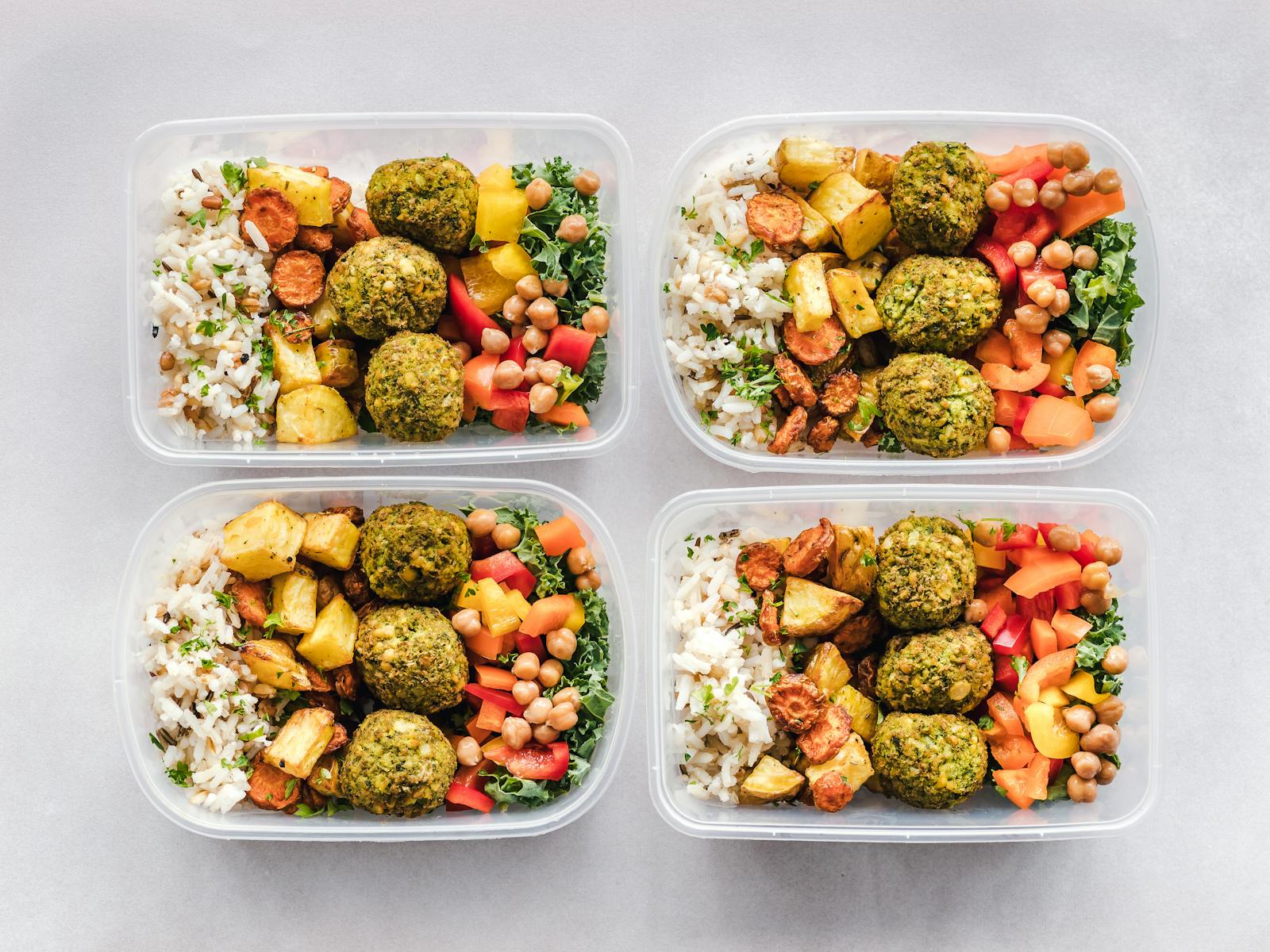
The plate method also adapts to different meals. A lunchbox can follow the same pattern in smaller containers, and how to build a healthy lunchbox for work: balanced ideas that travel well shows how. A soup-and-salad meal can follow it too: a bowl of soup with beans and vegetables, plus a piece of whole-grain bread, covers the same balance in a different shape.
Hand Portions: Measuring Without Tools
Hand portions are a practical alternative to scales and cups, because your hand is always with you and roughly matches your body size. A palm-sized portion of meat, fish, or tofu is about 3 to 4 ounces, which is the recommended amount for most adults. A fist is about a cup, a good guide for cooked grains, pasta, or cereal. A cupped hand holds about half a cup, useful for fruit, beans, or cooked vegetables. A thumb is about a tablespoon, which works for oils, butter, peanut butter, and salad dressing.
These guides are approximate, and that is the point: they are meant to be quick and good enough, not precise. A serving of cheese is about the size of two thumbs, or roughly an ounce and a half. A serving of nuts is about a small handful, or one ounce, which is easy to overdo from a large bag. A serving of cooked pasta is about a fist, which surprises many people who are used to restaurant portions of three or four fists.
Children need smaller portions, and their hands are smaller too, which is why the hand method works across ages. For older adults, protein portions deserve attention, since many older people eat less protein than they need. A palm of protein at two meals a day is a useful target for most older adults, alongside the guidance in how to eat more protein at breakfast without meat.
Portions for Common Foods
Some foods are harder to judge than others, so it helps to know the standard serving sizes. For grains, one serving is about half a cup of cooked rice or pasta, one slice of bread, or half a cup of cooked oatmeal. A typical restaurant pasta serving is three to four servings of grains, which is why splitting a pasta dish or taking half home is a smart move. For protein, one serving is about 3 ounces of cooked meat or fish, two eggs, or a cup of cooked beans or lentils. For dairy, one serving is a cup of milk or yogurt, or an ounce and a half of hard cheese.
Fruits and vegetables are the exception: most people can eat generously here. One serving of vegetables is about a cup raw or half a cup cooked, and the Dietary Guidelines for Americans recommend about two and a half to three cups of vegetables a day for adults. One serving of fruit is about a cup of fresh fruit or half a cup of dried fruit, and the guideline is about two cups a day. Winter fruits such as citrus are in season now, and winter fruits in season: citrus, pomegranates, persimmons covers the best choices.
Fats need the most care because they are calorie-dense and easy to over-pour. One serving of oil is a teaspoon, and a tablespoon of salad dressing is about a thumb and a half. Nuts are nutritious but dense: one ounce, about 23 almonds, is a serving, and a full cup from a party bowl can be four times that. For a fuller look at healthy fats and how they fit, see healthy fats explained: olive oil, nuts, avocados. Drinks count too: a standard serving of juice is about half a cup, far less than the tall glass many people pour, and healthy drinks: water, tea, and what to limit covers the options.
Portions When Eating Out and at Parties
Restaurants are the hardest place to control portions, because servings are often two to three times a standard portion. A few strategies help. Share an entree or order an appetizer as the main dish. Ask for a half portion, or for a box at the start of the meal and pack half away before eating. Choose grilled or roasted dishes over fried ones, and ask for sauces and dressings on the side. For more restaurant strategies, see healthy eating when eating out: smarter choices.
Holiday parties bring a different challenge: many small foods, eaten standing up, with no plate to measure against. Using a small plate, filling half of it with vegetables or salad first, and deciding in advance how many treats to have are all practical moves. For party-specific ideas, see how to stay healthy during holiday parties and how to handle holiday stress without overeating. Eating a balanced meal before a party also helps, so hunger does not drive the choices.
At home, the simplest portion tools are a smaller plate, a measuring cup for grains and pasta while learning, and serving food in the kitchen rather than placing serving bowls on the table. People tend to take seconds when food is within arm's reach, and moving the serving dishes away adds a small pause that is often enough. Eating slowly matters too: it takes about 20 minutes for fullness signals to register, and mindful eating: how to slow down and enjoy your food explains how to build that habit.
Portions, Hunger, and Listening to Your Body
Portion guides are starting points, not rigid rules. Hunger varies with activity, stress, sleep, and the time of day, and a very active person needs more food than someone who sits most of the day. The guides help most when they are combined with attention to hunger and fullness: eat when hungry, pause halfway through a meal to check, and stop when comfortably full rather than when the plate is empty. People who eat quickly often overshoot fullness before noticing, so slowing down is one of the most effective portion tools there is.
Skipping meals usually backfires on portions, because intense hunger at the next meal leads to larger servings eaten quickly. Regular meals and planned snacks keep hunger moderate and portions reasonable. For snack ideas that actually satisfy, see healthy snacks that actually fill you up. Meal prep helps too: when meals are portioned in advance, the decision is made once instead of at every hungry moment. For a practical system, see meal prep for busy weeks: balanced lunches without cooking daily and how to meal prep breakfasts for the week.
Finally, remember that portion control is not the same as restriction. The goal is enough food to feel satisfied and energized, with vegetables generous and the calorie-dense parts kept to the amounts the body needs. Overly strict portions lead to hunger, cravings, and overeating later, which defeats the purpose. A balanced plate, eaten slowly, is a sustainable approach that works for most people most of the time.

Frequently Asked Questions
Do I need to weigh my food to control portions?
No, not for most people. A food scale and measuring cups are useful for a week or two of learning, because they calibrate your eye. After that, the plate method and hand portions are accurate enough for everyday eating. Weighing every meal can turn eating into a chore and is usually unnecessary unless a clinician or dietitian has asked for it, for example when managing a specific health condition.
How much protein should be on my plate?
For most adults, about a quarter of the plate, or a palm-sized portion of about 3 to 4 ounces of cooked meat, fish, or tofu, or a cup of cooked beans or lentils. That works out to roughly 20 to 30 grams of protein per meal, which is a good target for most people. Active people and older adults may need a little more, and spreading protein across the day matters more than loading it into one meal.
Are vegetables really unlimited?
Almost. Non-starchy vegetables such as leafy greens, broccoli, carrots, cucumbers, and peppers are low in calories and high in fiber and water, so generous portions are fine for most people. Starchy vegetables such as potatoes, corn, and peas are nutritious but more calorie-dense, so they belong in the quarter of the plate reserved for grains and starches. Dressings and butter added to vegetables count separately and are worth measuring.
How do I handle portions at a buffet?
Use a small plate and fill half of it with vegetables or salad first, then add a palm of protein and a fist of grains. Skip a second trip for food you have already tried and did not enjoy, and take a break before deciding whether you want more. Buffets are designed to encourage overeating, so a simple plan made before approaching the table is the best defense.
What if I am still hungry after a balanced plate?
First, wait about 20 minutes, since fullness signals take time. If you are still hungry, add more vegetables or a little more protein rather than more grains or fats. Persistent hunger at every meal can also be a sign of poor sleep, stress, or meals that are too low in protein and fiber, and adjusting those factors often helps more than simply eating more. If hunger is constant despite balanced meals, talk to a clinician or dietitian.
Portion sizes are not about eating less of everything. They are about eating the right amount of each part: plenty of vegetables, a palm of protein, a fist of grains, and a thumb of healthy fat. Learn the visual guides once, use a smaller plate, serve food in the kitchen, and slow down at the table. These small changes add up, and they work without weighing, counting, or giving up the foods you enjoy.
Disclaimer: This article is for general information only and is not medical advice. Talk to a qualified health professional about your own situation.



0 Comments
Play nice — spam and promo links are deleted.