The short answer: the healthiest everyday drinks are the simplest ones — water first, then unsweetened tea, with milk or fortified alternatives in moderation — while sugary drinks, energy drinks, and alcohol are best limited. You do not need expensive juices, detox drinks, or vitamin waters to drink well. A daily pattern built around water, a few cups of tea or coffee if you enjoy them, and occasional treats will serve most people better than any single "super drink."
Drinks matter more than many people realize, because they can quietly add a large share of daily sugar without making you feel full. The Dietary Guidelines for Americans, published by the USDA and the U.S. Department of Health and Human Services, advise limiting added sugars, and sweetened beverages are one of the biggest sources in the typical American diet. A single 20-ounce bottle of regular soda can contain around 65 grams of sugar — more than the daily added-sugar limit the guidelines suggest for many adults. Choosing your drinks deliberately is therefore one of the easiest high-impact nutrition habits, and it costs nothing.
Water: The Default Drink
Water should be the backbone of your day. It hydrates without calories, sugar, or additives, and it is the reference point every other drink is measured against. The National Academies of Sciences, Engineering, and Medicine publish general adequate intake figures — roughly 3.7 liters (about 15.5 cups) of total water per day for men and 2.7 liters (about 11.5 cups) for women, counting all foods and beverages — but individual needs vary with activity, climate, and body size, and thirst is a reasonable guide for most healthy adults. Our guide to staying hydrated in cooler weather covers the signs that you may need more fluids, including darker urine and unusual tiredness, and simple habits for drinking enough when thirst fades.
If plain water bores you, infuse it: cucumber slices, citrus wedges, mint, or frozen berries add flavor without sugar. Sparkling water is another good option — it gives the fizz many people miss from soda, with no sugar, though flavored varieties are worth a quick label check for added sweeteners. Keep a bottle or glass visible on your desk; most people drink more when water is within reach than when they have to go looking for it.
Tea and Coffee: Enjoyed Plain, They Fit Well
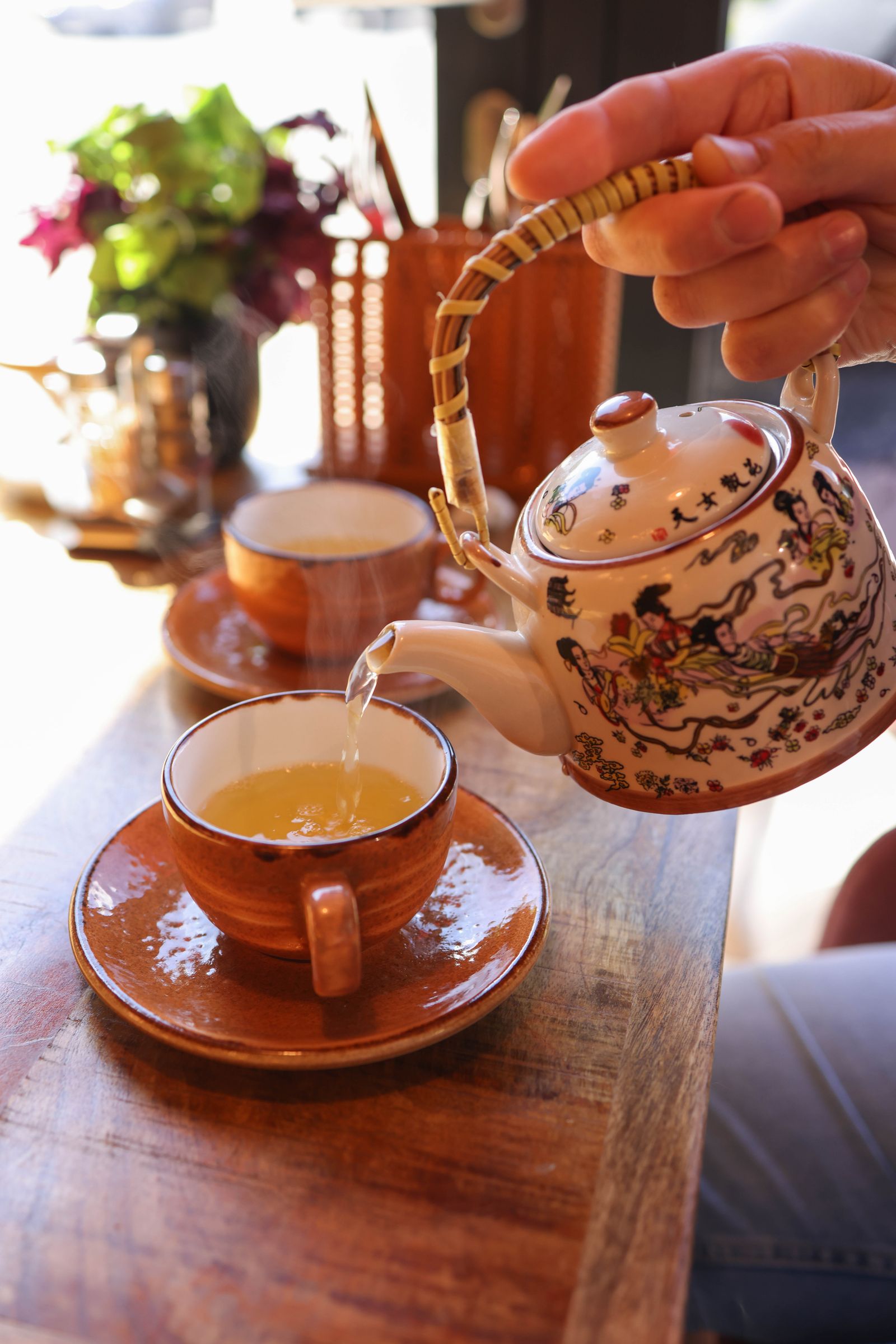
Unsweetened tea — green, black, or herbal — is a strong everyday choice. Tea contains plant compounds called polyphenols, and green tea in particular is widely studied as part of healthy dietary patterns, though no single drink transforms health on its own. Herbal teas such as chamomile, peppermint, and ginger are naturally caffeine-free and make a good evening option. Coffee, drunk plain or with a little milk, fits a healthy pattern for most adults too. The U.S. Food and Drug Administration (FDA) cites 400 milligrams of caffeine per day as an amount not generally associated with negative effects for healthy adults — roughly four cups of brewed coffee — but sensitivity varies, and caffeine late in the day can disturb sleep, as our guide to sleep hygiene basics explains.
The catch with both tea and coffee is what gets added. A plain cup of tea has virtually no calories; a large sweetened tea or a flavored coffee drink can carry as much sugar as a soda. If you like your coffee sweet, try reducing the sugar gradually — from two spoonfuls to one, then to half — or switching to milk for sweetness and body. Your taste adjusts faster than most people expect.
What to Limit, and Why
Sugary drinks. Regular soda, sweetened teas and lemonades, sports drinks, and many fruit drinks are the top category to limit. They deliver sugar and calories without fiber or fullness, and frequent consumption is linked in population studies with higher risk of weight gain and tooth decay. Fruit juice deserves a note here: even 100% juice concentrates the sugar of several fruits into one glass without the fiber of eating the fruit itself. The Dietary Guidelines suggest whole fruit over juice, and small portions of juice when you do choose it. Our guide to cutting back on added sugar has practical swaps for sweet drinks, including half juice and half sparkling water.
Energy drinks. These combine high caffeine with sugar (in sweetened versions) and stimulants, and they are easy to overdo. If you need an afternoon lift, a short walk, a glass of water, or a plain cup of tea is a steadier choice — and a snack with protein and fiber, like the ideas in our guide to healthy snacks that actually fill you up, usually beats a stimulant for lasting energy.
Alcohol. The Dietary Guidelines advise that if adults choose to drink alcohol, they limit intake — up to one drink per day for women and two for men on drinking days — and note that less is better, with some adults advised not to drink at all. Alcohol also adds calories, disrupts sleep, and impairs judgment, so it is a poor thirst quencher and a poor nightly habit.
Flavored and vitamin waters. Many are essentially lightly sweetened drinks with added vitamins you likely do not need in that form. Check the label: if sugar or sweeteners appear near the top of the ingredients, treat it as a sweet drink, not a health drink. Our guide to reading a nutrition label in 60 seconds shows how to spot this in seconds.
Milk and Plant-Based Alternatives
Milk provides protein, calcium, and vitamin D (in fortified milk in the United States), and it fits well for people who tolerate it — a glass with breakfast or in cooking is a reasonable part of a balanced day. Plant-based alternatives vary widely: unsweetened soy milk is closest to dairy milk in protein, while almond, oat, and rice drinks are usually much lower in protein unless fortified, and sweetened versions can carry several grams of added sugar per cup. If you use an alternative, choose an unsweetened, calcium- and vitamin-D-fortified version and check the label.
Frequently Asked Questions
How much water do I actually need? There is no single number for everyone. The National Academies' adequate intake figures are a starting reference, but activity, heat, illness, and diet all shift needs. Pale-yellow urine and steady thirst are practical everyday guides; if you have a condition that affects fluid balance, ask a health professional about your own target.
Is sparkling water bad for teeth? Plain sparkling water is far less acidic than soda or juice, and it is generally considered a reasonable choice. Flavored sparkling waters with citric acid are somewhat more acidic, but still well below sugary drinks. Drinking it with meals and keeping good dental habits covers most concerns.
Should I drink sports drinks when I exercise? For most workouts under an hour, plain water is enough. Sports drinks are designed for prolonged, sweaty exercise — typically over an hour of continuous activity — where electrolytes and carbohydrate help. For a regular gym session or walk, water does the job without the sugar.
Building a Healthier Drink Day
A simple daily pattern looks like this: start with a glass of water in the morning, keep water as your default through the day, enjoy tea or coffee plain if you like them, and save sweet drinks for occasional treats rather than daily habits. With meals, water or sparkling water pairs with anything; with breakfast, milk or a fortified alternative adds protein and calcium, complementing the balanced breakfast ideas in our guide to building a balanced breakfast. In the evening, switch to herbal tea or water so caffeine does not steal your sleep.
Two groups deserve a special note. For children, water and plain milk are the best everyday drinks, and the American Academy of Pediatrics generally advises limiting juice to small portions — about 4 ounces a day for young children and 8 ounces for older children — since whole fruit is a better source of fiber and fullness. For older adults, thirst sensation can weaken with age, so scheduled drinks — a glass of water with each meal and one between meals — help more than relying on thirst alone. In both cases, the same principle applies: make the healthy drink the easy, default choice, and keep sweet drinks as the exception.
Drinks are one of the simplest places to improve a diet, because the swap is usually painless: the same glass, the same habit, a better choice inside it. Pick one change this week — water as your default, one fewer sugary drink a day, or tea without sugar — and let it become automatic before adding the next.
Disclaimer: This article is for general information only and is not medical advice. Talk to a qualified health professional about your own situation.



0 Comments
Play nice — spam and promo links are deleted.