A balanced breakfast is simpler than most breakfast advice makes it sound: include a protein, a fiber-rich food, and a healthy fat, and you have a morning meal that keeps you full, steadies your energy, and covers the main nutrients your body needs to start the day. You do not need a perfect recipe or an expensive ingredient. A plate of eggs on whole-grain toast with avocado, or oatmeal topped with nuts and berries, already hits all three pillars. This guide explains what each pillar does, how much of it to aim for, and how to build breakfasts that fit a busy morning.
The short answer: protein, fiber, and healthy fat
Protein slows digestion and helps you feel full, fiber from whole grains, fruit, and vegetables supports steady digestion and gut health, and healthy fats from foods like nuts, seeds, avocado, and olive oil add staying power and help your body absorb certain vitamins. A breakfast built on only one of these — say, a pastry (mostly refined starch and sugar) or juice alone (mostly sugar with the fiber removed) — tends to leave you hungry again within an hour or two. A breakfast with all three lasts longer because each nutrient is digested at a different pace. The U.S. Department of Agriculture's MyPlate guidance makes the same point in plainer terms: aim for a mix of food groups at each meal rather than loading up on one.
None of this requires counting every gram. A useful rule of thumb is the plate test: can you point to the protein, the fiber source, and the fat source in your breakfast? If all three are present, the meal is balanced. If one is missing, add it — a handful of nuts on oatmeal, an egg beside your toast, or berries with your yogurt.
Protein: the staying-power pillar
Protein is the nutrient most people under-eat at breakfast. A typical American breakfast of cereal, toast, or a bagel may contain only a few grams of protein, while a protein-containing breakfast of 20 to 30 grams is a common target in nutrition guidance for adults. You do not need to hit an exact number, but the difference is noticeable: protein slows stomach emptying, which is why eggs keep you full far longer than a muffin with the same calories.
Good everyday protein sources for breakfast include eggs, Greek yogurt, cottage cheese, milk, tofu, beans, and nut butters. According to USDA FoodData Central, one large egg provides about 6 grams of protein, and a cup of plain nonfat Greek yogurt provides roughly 17 grams. Plant options work just as well: a cup of cooked oatmeal made with milk, plus a tablespoon of peanut butter, adds up to a respectable protein total, and a tofu scramble with vegetables is a complete protein meal on its own.
One caution is worth keeping: processed breakfast meats such as bacon and sausage are high in sodium and saturated fat, and the American Heart Association advises limiting both. They can appear occasionally, but they are a poor everyday protein choice compared with eggs, dairy, or plant proteins.
Fiber: the steady-energy pillar
Fiber is the part of plant foods your body cannot fully digest, and it is what keeps breakfast from turning into a quick sugar spike followed by a crash. The USDA's Dietary Guidelines note that most Americans eat far less fiber than recommended — about 14 grams per 1,000 calories is the commonly cited target, which works out to roughly 25 to 30 grams a day for many adults. Breakfast is the easiest meal to fix this, because whole grains and fruit are natural breakfast foods.
Whole oats are one of the best breakfast fiber sources: a cup of cooked oatmeal provides about 4 grams of fiber, and steel-cut oats provide a little more. Whole-grain bread, bran cereals, berries, apples with the skin on, and chia or flax seeds all add fiber quickly. A practical target is to get at least 5 grams of fiber at breakfast — for example, oatmeal with a cup of raspberries (about 8 grams of fiber per cup, per USDA data) clears it easily.
Fiber also feeds the gut microbes that researchers link to digestive health, and it adds bulk that helps with regular digestion. If you are increasing fiber, do it gradually and drink water with the meal, since a sudden large jump can cause bloating.
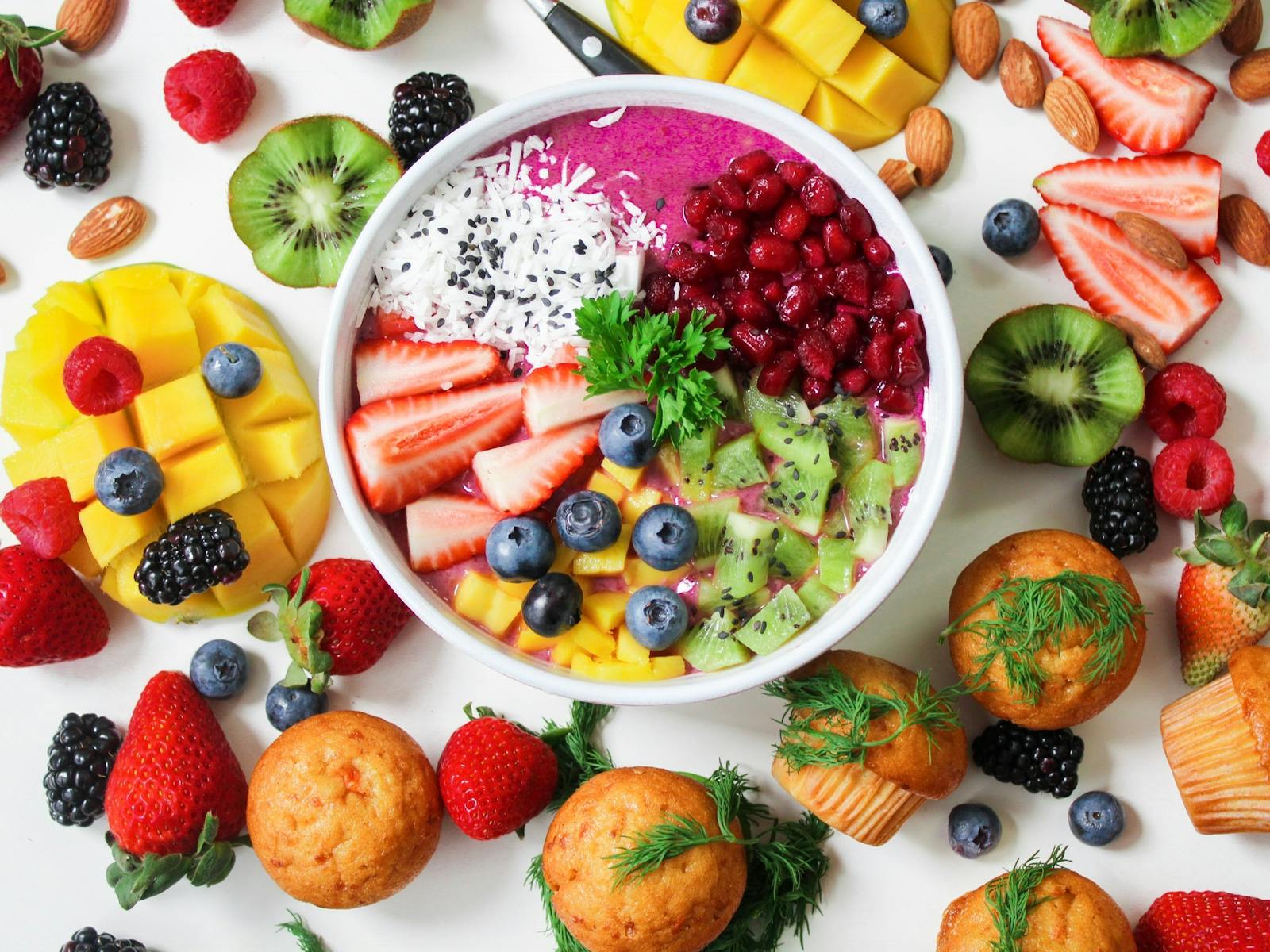
Healthy fats: the finishing pillar
Fat has a bad reputation it does not deserve. The fats worth limiting are saturated fats (heavy in butter, fatty meats, and fried foods) and trans fats, while unsaturated fats — the kind in olive oil, nuts, seeds, avocado, and fatty fish — are a normal, useful part of a balanced diet. The American Heart Association's guidance is to replace saturated fats with unsaturated ones where you can, rather than to cut fat altogether.
At breakfast, healthy fats are easy to add: a quarter of an avocado on toast, a tablespoon of ground flaxseed or chia seeds in oatmeal, a small handful of walnuts or almonds over yogurt, or a drizzle of olive oil on a vegetable scramble. These portions are small but effective — a tablespoon of chia seeds adds about 5 grams of fat, mostly unsaturated, along with fiber and a little protein. The key is portion awareness: nuts and oils are calorie-dense, so a small handful or a tablespoon is usually enough.
Putting it together: five balanced breakfasts
Here is what the three pillars look like in real breakfasts you can make in under 15 minutes:
- Eggs and avocado toast: two eggs on whole-grain toast with a quarter avocado. Protein from the eggs, fiber from the whole-grain bread, fat from the avocado.
- Berry oatmeal: oats cooked in milk, topped with raspberries and a tablespoon of chopped walnuts. Fiber from the oats and berries, protein from the milk, fat from the walnuts.
- Greek yogurt bowl: plain Greek yogurt with sliced apple, a spoonful of chia seeds, and a drizzle of nut butter. Protein from the yogurt, fiber from the apple and seeds, fat from the seeds and nut butter.
- Tofu vegetable scramble: tofu scrambled with spinach, peppers, and mushrooms, served with a slice of whole-grain toast. Protein from the tofu, fiber from the vegetables and toast, fat from the cooking oil and seeds sprinkled on top.
- Peanut butter banana toast: whole-grain toast with peanut butter and banana slices, plus a glass of milk. Protein from the peanut butter and milk, fiber from the bread and banana, fat from the peanut butter.
Notice that none of these requires a specialty product. The most balanced breakfast is usually the one built from ordinary foods you already buy.
Common breakfast mistakes
The most common mistake is a breakfast that is almost entirely refined carbohydrate: a large muffin, a frosted pastry, or a big glass of juice. These foods are not "bad" in isolation, but on their own they digest quickly and rarely keep you full until lunch. Pairing them helps — a pastry eaten with a boiled egg and a piece of fruit is a different meal from a pastry eaten alone.
The second mistake is skipping breakfast and then overeating later. Skipping is not harmful in itself — some people genuinely prefer it — but if you regularly find yourself ravenous by late morning and reaching for whatever is closest, a small balanced breakfast (even yogurt and fruit) usually steadies the day. Our guide to healthy seasonal foods has more ideas for building meals around whole foods, and our salad recipes show the same plate-building logic applied to lunch.
The third mistake is over-sweetening healthy bases. Plain oatmeal with fruit is a strong breakfast; oatmeal loaded with brown sugar and sweetened granola is mostly a dessert. Taste your food first — ripe fruit is often sweet enough — and treat sweeteners as a small addition, not the main event. The same logic applies to drinks: our healthy drink recipes keep sweetness from whole fruit rather than added sugar.

Breakfast on a busy morning
Balanced does not have to mean slow. Overnight oats (oats soaked in milk with chia seeds and fruit) take five minutes the night before and are ready from the refrigerator. Hard-boiled eggs keep for a week refrigerated and pair with fruit and a slice of whole-grain toast. A smoothie made from milk or yogurt, frozen berries, a banana, and a spoonful of nut butter covers all three pillars in one glass — just skip the sweetened juice base and let the fruit do the sweetening.
For children, the same pillars apply in smaller portions, and the same plate test works: a protein, a fiber food, and a healthy fat. Our guide to foods to limit close to bedtime is the evening counterpart to this one — what you eat late at night matters for sleep just as breakfast matters for the morning.
Frequently Asked Questions
Do I need protein at every breakfast?
Not every single day, but most days, yes — protein is the pillar most often missing from breakfast, and it is the one most tied to feeling full. If your usual breakfast is cereal and fruit, adding yogurt, an egg, or nut butter is the single highest-impact change you can make.
Is oatmeal alone a balanced breakfast?
Oatmeal alone is a good fiber base but a partial breakfast: it is light on protein and fat. Cook it in milk instead of water, or top it with nuts, seeds, or yogurt, and it becomes balanced without much extra effort.
Are smoothies healthy?
It depends on what is in them. A smoothie of whole fruit, milk or yogurt, and nut butter is balanced. A smoothie of juice and sweetened frozen blends is mostly sugar. Use whole fruit, include a protein source, and keep added sweeteners out.
How much fiber should breakfast contain?
Aim for at least 5 grams at breakfast as a practical starting point. Oats with berries, whole-grain toast with fruit, or a bran-based cereal all clear that bar easily.
Sources
- U.S. Department of Agriculture. MyPlate — guidance on building balanced meals from the food groups.
- U.S. Department of Agriculture, Agricultural Research Service. FoodData Central — nutrient data for eggs, Greek yogurt, oats, raspberries, and other foods mentioned.
- American Heart Association. Dietary Fats — guidance on replacing saturated fats with unsaturated fats.
- MedlinePlus, National Library of Medicine. Dietary Fiber — background on fiber and daily intake.
Disclaimer: This article is for general information only and is not medical advice. Talk to a qualified health professional about your own situation.



0 Comments