Eating at a restaurant does not have to derail a balanced eating pattern. The simplest way to build a healthier plate when you eat out is to use the same plate method you would use at home: fill about half the plate with vegetables and fruits, about a quarter with a protein food, and about a quarter with a whole grain or starchy vegetable, and ask for sauces and dressings on the side. That one visual rule works at almost any restaurant, from a diner to a fast-casual bowl shop, and it leaves plenty of room to enjoy the meal.
The short answer is that a healthier restaurant plate is built, not found. Menus rarely label a perfect plate for you, so a few small choices — more vegetables, a lean protein, a whole grain, water to drink, and a dressing on the side — do most of the work. You do not need to skip the foods you love or order only salads. You just need a plan before the server arrives.
According to the United States Department of Agriculture (USDA), the MyPlate model encourages meals built around vegetables, fruits, grains, protein foods, and dairy. Restaurant portions are often larger than the amounts MyPlate describes, which is why the plate method is so useful: it is about proportions, not measuring cups, and it travels well. For more on the home version of this approach, see our guide to building a balanced breakfast and our ideas for planning balanced dinners in 30 minutes or less.
Start With the Plate Method
Picture your plate divided into sections. Half of it goes to vegetables and fruits: a side salad, steamed broccoli, roasted carrots, grilled asparagus, or a fruit cup. A quarter goes to protein: grilled chicken, fish, tofu, beans, or eggs. The last quarter goes to a grain or starchy vegetable: brown rice, whole-wheat bread, quinoa, corn, or potatoes. If your meal comes as a sandwich, a bowl, or a pasta dish, the same idea still applies — look for the vegetables, the protein, and the grain in the dish, and adjust the balance with a side or a swap.
This method also helps with the most common restaurant trap: a plate that is mostly refined grains and fried foods, with vegetables as a garnish. When vegetables take up half the plate, the meal naturally includes more fiber and a wider range of nutrients, and the richer foods become a satisfying part of the meal rather than the whole meal.
Before You Order: Three Menu Strategies
A little preparation makes restaurant choices much easier. If the menu is online, glance at it before you go and pick one or two options that fit the plate method. Deciding while you are hungry, rushed, and surrounded by tempting descriptions is much harder than deciding calmly at home.
Look for words that describe cooking methods
Menu language gives useful clues. Words like grilled, roasted, steamed, baked, and broiled usually point to simpler preparations. Words like crispy, breaded, fried, creamy, and smothered usually signal extra fat, sodium, or added sugars. Neither category is off-limits, but knowing the difference helps you balance the plate — for example, pairing a fried appetizer with a vegetable-heavy main dish.
Ask about sides and swaps
Most restaurants will swap a side without fuss. Trading fries for a side salad, steamed vegetables, or fruit is often free or low cost, and it can change the whole balance of the plate. The same goes for dressings and sauces: asking for them on the side lets you use a couple of tablespoons instead of the half cup a kitchen might pour on.
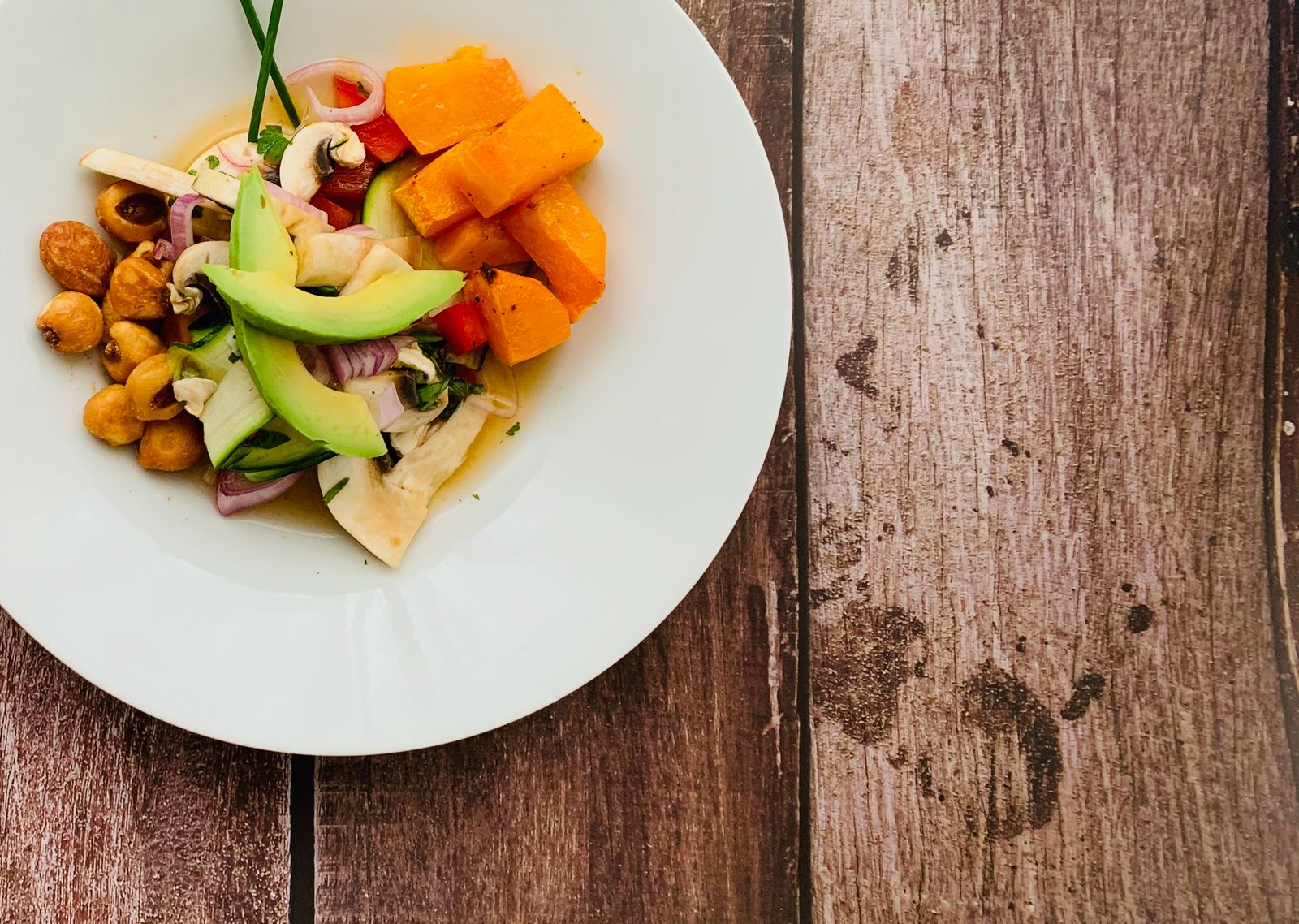
Building Each Part of the Plate
Once you know the plate method, the next step is choosing the pieces. The tips below work across cuisines, from American diners to Mexican, Italian, and Asian restaurants.
Vegetables and fruits first
Start with the vegetable half of the plate. A garden salad with dressing on the side, a cup of vegetable soup, or a side of steamed or roasted vegetables all count. At a Mexican restaurant, that might be fajita vegetables and pico de gallo. At an Italian restaurant, it might be a side of broccoli or a mixed green salad before the pasta. At a sandwich shop, it might mean loading up on lettuce, tomato, cucumber, peppers, and onions. Fresh, frozen, and cooked vegetables all contribute, so choose the ones you actually enjoy.
Choose a protein you enjoy
For the protein quarter, grilled chicken, turkey, fish, shrimp, tofu, tempeh, and beans are all solid everyday options. The USDA notes that seafood, lean meats, poultry, eggs, legumes, nuts, and seeds all belong in the protein group, and variety across the week is a good goal. If you prefer a richer protein like a burger, ribs, or fried chicken, enjoy it in a reasonable portion and let vegetables fill the rest of the plate — balance across the meal matters more than any single item.
Pick a whole grain when you can
For the grain quarter, whole grains such as brown rice, quinoa, whole-wheat bread, and whole-wheat pasta add fiber that refined grains lack. Many restaurants now offer brown rice or whole-grain bread as a swap, and it is worth asking. If only white rice or white bread is available, that is fine too — portion and balance still matter, and a smaller serving of a refined grain alongside plenty of vegetables is a reasonable plate. Our guide to cooking whole grains at home can help you get comfortable with these foods so they feel familiar when you see them on a menu.
Drinks, Portions, and the Extras
Drinks are an easy place to save added sugars without feeling deprived. Water is the simplest choice, and sparkling water with lemon or lime feels like a treat. Unsweetened iced tea is another easy option. Sweetened sodas, lemonades, and many specialty coffees can add several hundred calories of sugar to a meal without adding fullness, so if you enjoy them, a small size or sharing one with the table keeps the pleasure while limiting the sugar. For more on drink choices, see our guide to healthy drinks: water, tea, and what to limit.
Portions deserve attention because restaurant servings are often sized for two appetites. A few tactics help: share an entree and add a salad, ask for a to-go box when the food arrives and set half aside right away, or order an appetizer plus a side salad as your meal. None of these require willpower at the end of the meal, when the food is already in front of you — they work because the decision happens early.
Bread baskets, chips, and appetizers are part of the fun of eating out, and they do not need to be banned. A useful approach is to enjoy a small amount mindfully — one piece of bread with olive oil, a handful of chips with salsa — rather than grazing through the whole basket while waiting. Eating slowly and paying attention to fullness helps here; our guide to mindful eating has practical ways to slow down without overthinking every bite.

Healthier Plates at Common Restaurant Types
Different restaurants call for slightly different moves. At a burger place, a grilled chicken sandwich or a smaller burger with lettuce, tomato, and onion, plus a side salad instead of fries, fits the plate method well. At a pizza restaurant, one or two slices loaded with vegetables, plus a large salad, beats a whole pie eaten standing up. At a sushi restaurant, sashimi or a roll with vegetables, plus seaweed salad or edamame, balances the rice. At a buffet, the plate method is your best friend: survey the whole buffet first, then fill half your plate with vegetables and salads before adding a protein and a grain.
Fast food deserves a special note because it is where many people eat on busy days. Most chains now offer grilled chicken, salads, fruit cups, and water, and nutrition information is usually posted on the menu board or available on request. Checking calories and sodium before ordering — a habit from our guide to reading a nutrition label in 60 seconds — takes less than a minute and often changes the choice.
A Simple Ordering Script
If you are not sure what to say, try this: "I'll have the grilled chicken with a side salad instead of fries, dressing on the side, and water to drink, please." That one sentence covers the protein, the vegetable swap, the dressing, and the drink. For a pasta dish: "Could I have the grilled vegetables added and the sauce on the side?" For a sandwich: "Whole-wheat bread, extra vegetables, and a fruit cup instead of chips, please." Servers hear these requests every day, and most kitchens handle them easily.
Finally, remember that one restaurant meal does not define your eating pattern. The USDA's dietary guidance is about overall patterns across days and weeks, not perfection at a single meal. A celebratory dinner with dessert and friends is part of a full life. Build a healthier plate most of the time, enjoy the occasions fully, and get back to your usual pattern at the next meal.
Frequently Asked Questions
What is the easiest healthy choice at a restaurant?
Start with the plate method: half vegetables, a quarter protein, a quarter whole grain, dressing on the side, and water to drink. That framework works at nearly any restaurant and does not require memorizing nutrition facts.
Are salads always the healthiest restaurant option?
Not necessarily. A salad loaded with fried toppings, cheese, bacon, and a full cup of creamy dressing can be heavier than a grilled chicken plate. Look for salads built on greens and vegetables with a lean protein and dressing on the side.
How do I handle a restaurant meal when I am very hungry?
Order a vegetable-based starter, such as a salad or vegetable soup, and drink water while you wait. Taking the edge off your hunger before the main dish arrives makes balanced choices easier.
Should I skip dessert at restaurants?
There is no need to skip dessert every time. Sharing a dessert with the table, ordering a fruit-based option, or enjoying a small portion lets you end the meal on a sweet note without overdoing it.
Sources
- U.S. Department of Agriculture. MyPlate — guidance on building balanced meals from the five food groups.
- U.S. Department of Agriculture, Agricultural Research Service. FoodData Central — nutrient data for foods mentioned.
- Dietary Guidelines for Americans, 2020–2025. dietaryguidelines.gov — general guidance on overall eating patterns.
Disclaimer: This article is for general information only and is not medical advice. Talk to a qualified health professional about your own situation.



0 Comments
Play nice — spam and promo links are deleted.