The short answer: eating healthily at a restaurant comes down to four moves — choose a vegetable-based starter, pick a protein with a whole grain or extra vegetables, ask for sauces and dressings on the side, and drink water first. You do not need to skip restaurants, order only salads, or count every calorie. With a quick scan of the menu before you order, most restaurant meals can be balanced, and you can still enjoy the food and the occasion.
Restaurant meals tend to be larger, saltier, and richer than home-cooked meals, not because restaurant food is bad, but because restaurants cook for flavor and generosity. Portions are often sized for sharing or for hearty appetites, and sauces, cheese, and fried coatings add up quietly. Knowing this in advance helps you plan rather than react. Decide before you arrive that you will enjoy the meal, eat slowly, and stop when you feel comfortably full — then choose foods that make that plan easy.
Before You Order: Scan the Menu Smartly
If the menu is online, glance at it before you go. Picking in advance removes the pressure of a hurried decision at the table, and it lets you spot the balanced options without the distraction of a growling stomach. Look for words that signal lighter cooking: grilled, roasted, steamed, baked, or broiled. Be more cautious with foods described as fried, crispy, creamy, smothered, or loaded — these are usually higher in added fat and sodium. That does not mean never ordering them, but it helps to know what you are choosing.
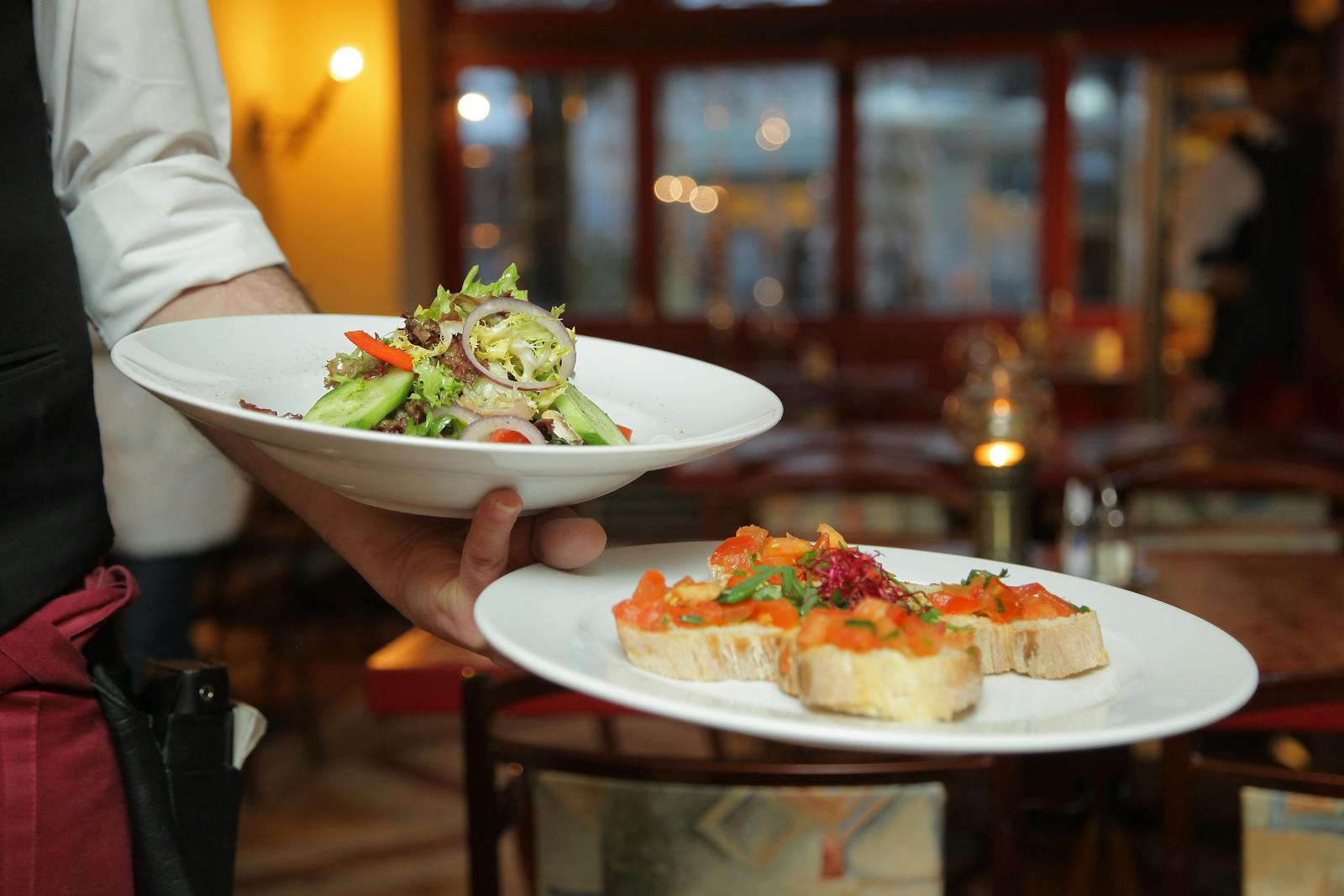
Start with vegetables when you can. A salad with dressing on the side, a vegetable soup, or a shared vegetable appetizer fills part of your appetite with fiber and volume before the main course arrives. At a buffet, the same idea applies: fill half your plate with vegetables and salad first, then add protein and a grain. Our guide to building a balanced breakfast uses the same plate logic — a mix of vegetables or fruit, protein, and a whole grain — and it works just as well at dinner.
Building a Balanced Restaurant Plate
Aim for the same balance you would at home: about half the plate vegetables or salad, a quarter protein, and a quarter grains or starchy vegetables. Grilled chicken, fish, tofu, or beans are reliable protein choices. Brown rice, whole-wheat bread, or a baked potato are better grain choices than fries when they are available, and extra vegetables can always replace one side. If the dish comes with two starchy sides, such as rice and fries, ask to swap one for vegetables or salad — most restaurants will do this without a fuss.
Portions deserve a plan of their own. Restaurant servings are often double a standard serving, so consider sharing a main course, ordering a starter as your main, or asking for a box at the start of the meal and setting half aside before you begin eating. Eating slowly helps too: it takes time for fullness signals to catch up, and a meal eaten over 20 to 30 minutes is more satisfying than the same food eaten in 10. Put your fork down between bites, enjoy the conversation, and check in with yourself halfway through the plate.
Sauces, Dressings, and Drinks
Sauces and dressings are where many restaurant meals quietly gain extra fat, sugar, and sodium. Asking for them on the side puts you in control: dip your fork in the dressing, then pick up the salad, rather than pouring it over everything. Creamy dressings, such as ranch and Caesar, are richer than vinaigrettes, and sweet sauces, such as teriyaki and barbecue, often carry added sugar. Again, this is about awareness, not avoidance — a little sauce enjoyed mindfully is fine.
Drinks are the other quiet source of extra sugar. Water is the simplest choice, and sparkling water with lemon feels special without added sugar. If you drink alcohol, keep portions moderate and alternate each alcoholic drink with a glass of water. Sugary sodas, sweetened teas, and large juice servings can add as much sugar as a dessert; our guide to healthy drinks compares water, tea, and the drinks worth limiting. For more on sugar specifically, see cutting back on added sugar without giving up sweet foods.
Takeout and Delivery Strategies
Takeout follows the same rules, with one advantage: you eat at home, so you can add your own vegetables or salad to the meal. Order a stir-fry with extra vegetables, a grain bowl with beans and greens, or a sandwich with whole-grain bread and a side salad instead of chips. If you order pizza, choose vegetable toppings, ask for light cheese if that option exists, and pair two slices with a large salad rather than eating four slices alone. The salad does not cancel the pizza; it simply balances the meal and helps you feel full sooner.
Delivery apps make it easy to order more than you need, especially with minimum-order rules and combo deals. Order for the meal you are eating, not for the discount, and keep leftovers for lunch the next day — a habit our guide to building a healthy lunchbox for work turns into a routine. If you order takeout often, keep a few healthy staples at home — salad greens, canned beans, frozen vegetables — so every takeout meal can be rounded out quickly.
Special Occasions and Desserts
Special occasions deserve enjoyment, and a single celebratory meal does not undo an overall healthy pattern. If you know dinner will be rich, eat a little lighter earlier in the day without skipping meals — skipping lunch only makes you hungrier and more likely to overeat at dinner. At the restaurant, enjoy the food you most want, share dishes you are curious about, and leave room for dessert if it matters to you.
For dessert, sharing is often the most satisfying strategy: everyone tastes something sweet without a full portion each. Fruit-based desserts, such as sorbet or fresh fruit with a small scoop of ice cream, are lighter than heavy cakes and pastries, but the best dessert is usually the one you genuinely enjoy. Order it, eat it slowly, and move on without guilt. Healthy eating is a pattern over weeks and months, not a grade for a single meal.
Cuisine-by-Cuisine Quick Guide
At a Mexican restaurant, choose grilled chicken or bean dishes, corn tortillas, salsa, and guacamole in moderation, and go easy on fried chips and cheese-heavy dishes. At an Italian restaurant, tomato-based sauces are lighter than cream-based ones, and a side of vegetables balances pasta well. At an Asian restaurant, steamed rice, stir-fried vegetables, and tofu or lean meat are strong choices, while tempura and sweet sauces are heavier. At a burger place, a grilled chicken sandwich or a smaller burger with a side salad beats a double burger with large fries. The pattern is the same everywhere: vegetables first, a lean protein, a sensible grain, and sauces on the side.
Eating out healthily is a skill, and like any skill it improves with practice. The first few times, you may forget to ask for dressing on the side or order more than you meant to. That is normal. Each meal is another chance to practice, and the habits — scanning the menu, adding vegetables, eating slowly — soon become automatic. Restaurants are part of social life, celebration, and travel; the goal is to enjoy them fully while keeping your overall eating pattern balanced.
Frequently Asked Questions
Is it okay to eat out every week?
Yes, if your overall pattern is balanced. Weekly restaurant meals fit easily into a healthy diet when you use the strategies in this article — vegetables first, a lean protein, sensible portions, and water as your main drink. What matters is the pattern over weeks, not any single meal.
What is the healthiest thing to order at a restaurant?
There is no single healthiest dish, but grilled fish or chicken with vegetables and a whole grain is a reliable choice almost everywhere. Salads with dressing on the side and a protein topping are another strong option, as long as the toppings are not mostly fried or cheese-heavy.
Should I skip dessert when eating out?
Not necessarily. Sharing a dessert, choosing a fruit-based option, or simply enjoying a full dessert on a special occasion are all reasonable. Dessert is part of enjoying food, and an overall balanced pattern leaves room for it.
How do I handle a buffet without overeating?
Survey the whole buffet before taking a plate, fill half your plate with vegetables and salad first, choose one protein and one grain, and sit down to eat slowly. Going back for a small second helping of something you truly enjoyed is better than loading the first plate with everything.
Disclaimer: This article is for general information only and is not medical advice. Talk to a qualified health professional about your own situation.



0 Comments
Play nice — spam and promo links are deleted.