Healthy fats are one of the most misunderstood parts of everyday eating. For years, fat was treated as something to avoid, but nutrition guidance has moved on: the type of fat matters far more than the total amount. The fats in olive oil, nuts, and avocados are mostly unsaturated fats, the kind that nutrition experts generally describe as the better choice for an everyday eating pattern. This article explains what healthy fats are, how olive oil, nuts, and avocados compare, how much to use, and simple ways to work them into meals you already cook.
The short answer is this: use unsaturated fats in place of saturated fats where you can, keep portions sensible because all fats are calorie-dense, and let whole foods such as olive oil, nuts, seeds, and avocados do most of the work. You do not need a special diet or expensive products. A drizzle of olive oil on vegetables, a small handful of walnuts on oatmeal, or half an avocado on toast are all practical examples of healthy fats in action.
What Are Healthy Fats?
Fats are usually grouped into three types. Saturated fats are mostly found in animal foods such as butter, cheese, fatty cuts of meat, and coconut oil, and in many processed snacks. Unsaturated fats are divided into monounsaturated and polyunsaturated fats. Monounsaturated fats are found in olive oil, avocados, and most nuts. Polyunsaturated fats include the omega-3 and omega-6 fats found in fatty fish, walnuts, flaxseed, and sunflower oil. Trans fats, once common in partially hydrogenated oils, are now largely removed from the US food supply after the FDA determined they were not generally recognized as safe.
The Dietary Guidelines for Americans recommend keeping saturated fat to less than 10 percent of daily calories and replacing saturated fats with unsaturated fats. That swap, rather than simply cutting all fat, is the approach supported by major sources including the American Heart Association and Harvard Health. The idea is simple: what you use instead of butter matters. Replacing butter on bread with olive oil, or swapping a processed snack for a handful of nuts, changes the fat profile of the meal without changing how full you feel.
Fat also does useful work in the body. It helps absorb fat-soluble vitamins (A, D, E, and K), provides energy, and helps food taste satisfying. A meal with some healthy fat tends to keep people feeling full longer than a fat-free version of the same meal, which is one reason very low-fat eating plans can be hard to stick with. The goal is balance, not elimination.
Olive Oil: The Everyday Workhorse
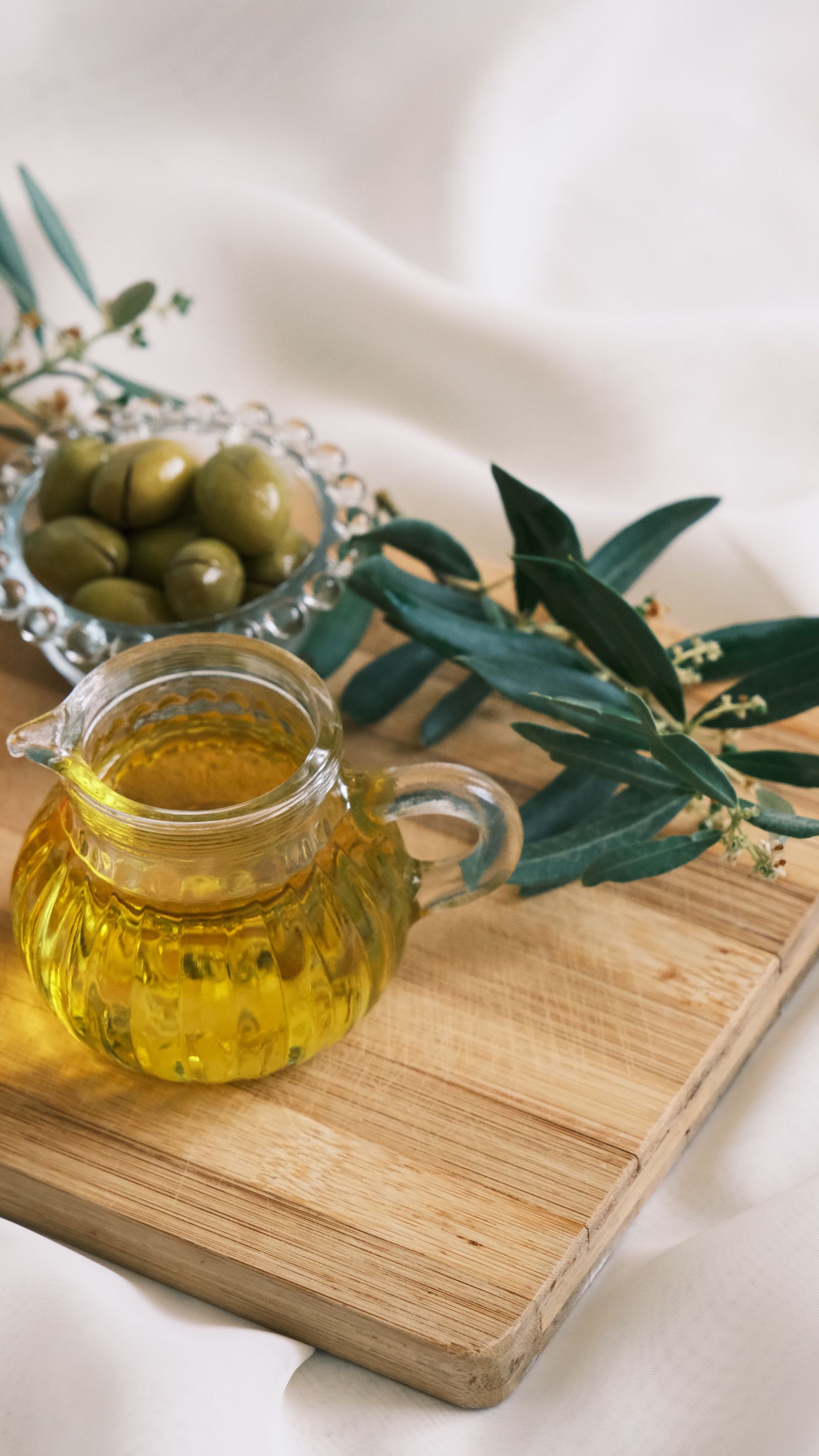
Olive oil is mostly monounsaturated fat, and extra virgin olive oil is the least processed form. It is made by pressing olives without heat or chemicals, which keeps more of the flavor and the plant compounds that give it its peppery bite. Regular or "pure" olive oil is more refined and has a milder flavor and a higher smoke point, which makes it a good choice for roasting and frying.
Research on Mediterranean-style eating patterns, where olive oil is the main added fat, has been widely reported by sources including Harvard Health and the Mayo Clinic. These eating patterns are associated with better markers of heart health in population studies, although no single food deserves all the credit. Olive oil is one part of a pattern that also includes plenty of vegetables, whole grains, beans, and fish.
In the kitchen, olive oil is easy to use. A tablespoon is about 120 calories, so measuring for a while helps you learn what a serving looks like. Use it to dress salads, drizzle over cooked vegetables, brush on bread instead of butter, or roast root vegetables. For high-heat cooking, regular olive oil or another oil with a higher smoke point is often a better fit than extra virgin, which can smoke and lose flavor at very high temperatures. Store olive oil in a cool, dark place and use it within a few months of opening for the best flavor.
When you shop, look for a harvest date or a "best by" date, a dark bottle, and a label that says "extra virgin" if that is what you want. Price alone is not a reliable guide to quality, and a mid-priced bottle from a store you trust is usually fine for everyday cooking. If you are watching your food budget, remember that a little olive oil goes a long way: one bottle can last weeks when you measure it. For more on keeping food costs down, see our guide on how to eat well on a small budget.
Nuts and Seeds: Small Portions, Big Flavor
Nuts are one of the easiest sources of healthy fats to add to a normal day. Walnuts, almonds, pistachios, cashews, and pecans are all rich in monounsaturated fats, and walnuts are a notable plant source of omega-3 fats. Seeds such as pumpkin seeds, sunflower seeds, and ground flaxseed bring a similar profile. A standard serving is about one ounce, roughly a small handful or about 1/4 cup, and it usually lands between 160 and 200 calories depending on the type.
The important detail is the portion. Nuts are filling and nutrient-dense, which is exactly why they work well as a snack, but it is also easy to eat three servings without noticing. Pre-portioning into small containers or buying single-serving packs can help. Our guide to healthy snacks that actually fill you up has more ideas for snacks that keep you satisfied between meals.
Choose nuts that are raw or dry-roasted and unsalted when you can. Honey-roasted and heavily salted versions add sugar and sodium that work against the point. Nut butters follow the same rule: look for a label that lists just nuts, and maybe salt. Natural peanut butter and almond butter separate in the jar, which is normal, and a quick stir fixes it. Two tablespoons is a standard serving, so measure it the first few times to calibrate your eye.
Nuts fit into almost any meal. Sprinkle chopped walnuts over oatmeal or yogurt, add sliced almonds to a salad, stir peanut butter into a smoothie, or toss pumpkin seeds over roasted squash. If you cook with whole grains often, nuts add crunch and staying power: try them in the grain bowls described in our article on how to cook whole grains.
Avocados: Creamy, Versatile, and Filling
Avocados are unusual among fruits because most of their calories come from fat, and most of that fat is monounsaturated. A whole medium avocado has roughly 240 calories and about 10 grams of fiber, which helps explain why half an avocado on toast feels so much more satisfying than plain toast. Avocados also provide potassium, folate, and vitamin E, along with the fat-soluble vitamins that fat helps the body absorb.
Picking a ripe avocado takes a little practice. It should yield gently to pressure in your palm, without feeling mushy or having soft spots. If it is hard, leave it on the counter for a few days; once ripe, move it to the fridge to slow further ripening. To keep a cut half fresh, leave the pit in, sprinkle a little lemon juice on the flesh, and wrap it tightly.
Avocado works well beyond toast and guacamole. Mash it with a fork and spread it on a sandwich in place of mayonnaise, dice it into a grain bowl, blend it into a smoothie for creaminess, or slice it over eggs. If you are building a better breakfast, our article on how to build a balanced breakfast shows how protein, fiber, and healthy fats work together in the morning.
How Much Healthy Fat Do You Need?
There is no single number that fits everyone, because total fat needs depend on total calories. The Dietary Guidelines for Americans suggest that adults get 20 to 35 percent of daily calories from fat, with saturated fat under 10 percent. For a 2,000-calorie day, that means roughly 44 to 78 grams of total fat, and less than about 22 grams of saturated fat. Most people do not need to track grams daily; the practical approach is to choose unsaturated fats most of the time and keep fried foods, fatty meats, and full-fat dairy as occasional choices rather than defaults.
A few everyday swaps cover most of the ground:
- Butter on vegetables or bread: try olive oil, or mashed avocado.
- Creamy salad dressing: try a simple mix of olive oil, lemon juice, and mustard.
- Chips or crackers as a snack: try a small handful of unsalted nuts.
- Mayonnaise on a sandwich: try mashed avocado or hummus.
- Cooking in lard or shortening: try olive oil or another unsaturated oil.
Reading labels helps too. A nutrition label shows total fat, saturated fat, and trans fat per serving, and the ingredient list shows which oils a product contains. Our guide on how to read a nutrition label in 60 seconds walks through exactly what to look for.

Common Mistakes With Healthy Fats
The most common mistake is treating "healthy fat" as "unlimited fat." Olive oil, nuts, and avocados are good choices, but they are still about 120 calories per tablespoon of oil, 160 to 200 calories per ounce of nuts, and about 120 calories per half avocado. Portions matter, especially if you are trying to keep your overall calorie intake steady. Measuring for a week or two is usually enough to build a reliable sense of a serving.
A second mistake is adding healthy fats on top of everything else instead of swapping them in. Pouring olive oil over a meal that already includes butter and cheese adds calories without changing the saturated fat balance. The benefit comes from replacement: olive oil instead of butter, nuts instead of chips, avocado instead of mayonnaise. The swap is the strategy.
A third mistake is trusting front-of-package claims without checking the label. A product can say "made with olive oil" while containing mostly cheaper oils, or "low fat" while being high in added sugar. The ingredient list and the nutrition facts panel tell the real story, and a short label is usually a good sign. For more on cutting back on added sugar, which often hides in low-fat products, see cutting back on added sugar without giving up sweet foods.
Putting It Together: A Day With Healthy Fats
Here is what a normal day might look like. Breakfast: oatmeal topped with a tablespoon of chopped walnuts and sliced banana. Lunch: a grain bowl with quinoa, beans, roasted vegetables, and a drizzle of olive oil and lemon. Snack: an apple with two tablespoons of natural peanut butter. Dinner: salmon or roasted vegetables with a tablespoon of olive oil, plus a side of whole grains. Nothing exotic, nothing expensive, and each meal includes a source of unsaturated fat that helps it feel satisfying.
If you eat meat, fatty fish such as salmon, sardines, and trout add omega-3 fats that plant foods provide only in smaller amounts. Two servings of fish a week is the general guidance from the Dietary Guidelines for Americans and the American Heart Association. If you do not eat fish, walnuts, ground flaxseed, and chia seeds are plant sources of omega-3 fats, though the body converts them less efficiently.
Frequently Asked Questions
Is olive oil healthy even though it is high in calories?
Yes, in normal amounts. Olive oil is calorie-dense, like all fats, but its fat is mostly monounsaturated, and it replaces saturated fat when you use it instead of butter. Measure a tablespoon or two rather than pouring freely, and it fits easily into a balanced eating pattern.
Are nuts fattening?
Nuts are calorie-dense, so portions matter, but studies of everyday eating patterns generally find that people who eat modest amounts of nuts do not gain weight from them, likely because nuts are very filling. Stick to about a small handful a day and choose unsalted, unflavored nuts.
Can I eat avocado every day?
For most people, yes. Half an avocado a day is a common serving, and it fits well into a balanced diet. If you eat a whole avocado daily, just count it as part of your overall fat and calorie intake for the day.
Is coconut oil a healthy fat?
Coconut oil is high in saturated fat, so most major guidelines, including the American Heart Association, suggest treating it like butter: fine occasionally, but not the everyday choice. Olive oil is the better default for daily cooking.
What about fat-free products?
Fat-free does not automatically mean healthier. Many fat-free products add sugar or salt to replace flavor, and they may leave you hungry sooner. A small amount of healthy fat often makes a meal more satisfying and easier to enjoy.
Healthy fats are not a trend or a trick. Olive oil, nuts, and avocados are ordinary foods with a well-studied fat profile, and the way to use them is straightforward: choose them over saturated fats, keep portions sensible, and let them make your meals more satisfying. Start with one swap this week, notice how it feels, and build from there. Small, steady changes are the ones that last.
Disclaimer: This article is for general information only and is not medical advice. Talk to a qualified health professional about your own situation.



0 Comments
Play nice — spam and promo links are deleted.