The Short Answer: Cook Once, Eat Well Three Times
Meal prep for busy weeks does not mean cooking seven days of food on a Sunday or eating the same lunch every day. It means cooking a few versatile bases once — a grain, a protein, and roasted vegetables — and turning them into different balanced lunches across the week. The U.S. Department of Agriculture (USDA) dietary guidance emphasizes a pattern built on vegetables, fruits, whole grains, and lean proteins, and meal prep is simply a practical way to make that pattern happen on days when time is short. When lunch is already in the fridge, the vending machine and the takeout app lose most of their power.
A balanced lunch, in the USDA's terms, is a plate with roughly half vegetables and fruits, a quarter whole grains or starchy vegetables, and a quarter protein, with water as the drink. That formula is flexible: a grain bowl, a wrap, a soup, or a salad can all fit it. What matters is the mix, not the format. Our guide to building a balanced breakfast uses the same logic for the morning plate, and the same balance works at midday.
Why Meal Prep Works for Busy People
The hardest part of eating well on a busy day is not knowledge; it is decision fatigue. At noon, hungry and rushed, you will eat whatever is easiest. Meal prep moves the decision to a calmer moment — Sunday evening, or any evening when you have an hour — and it moves the cooking to a moment when you can cook in bulk. Research on meal planning summarized by the National Institutes of Health (NIH) links planning meals in advance with more frequent home cooking and diets richer in vegetables and whole grains. The mechanism is unglamorous but real: food that is ready gets eaten, and food that is not ready gets replaced by whatever is fastest.
Meal prep also saves money and reduces waste, because you buy ingredients with a plan and use them across several meals. A bag of rice, a tray of chicken thighs or a block of tofu, and a tray of seasonal vegetables can become three or four lunches for less than the cost of two takeout orders. Fall produce is a good place to start: our seasonal eating in fall guide covers squash, apples, and root vegetables that roast well and keep well, which is exactly what meal prep needs.
The Sunday Formula: Three Bases, Five Lunches
Pick one item from each group, cook them in about an hour, and you have the skeleton of a week's lunches.
Base 1: A Grain or Starchy Vegetable
Brown rice, quinoa, farro, or roasted sweet potatoes all work. Cook a large pot or tray, cool it promptly, and refrigerate it in a covered container. Whole grains are associated with higher fiber intake and steadier fullness, according to MedlinePlus, and they reheat well, which is why they anchor so many meal prep plans. A cup of cooked grain per lunch is a reasonable portion for most adults, adjusted to your appetite and activity.
Base 2: A Protein
Choose one or two proteins you enjoy: roasted chicken thighs, baked tofu, hard-boiled eggs, canned beans (rinsed), or lentils. The USDA guidance recommends varying protein sources across the week, so a week with both a bean lunch and a chicken lunch is better than a week of the same protein every day. Cook the protein simply — salt, pepper, olive oil, and a spice you like — so it can fit into different flavor combinations later.
Base 3: Roasted or Raw Vegetables
Roast a tray of vegetables — carrots, squash, broccoli, onions — with olive oil until tender, and keep a bag of raw vegetables (cucumber, carrots, salad leaves) for crunch. Vegetables are the largest part of a balanced plate, and having them already cooked or washed removes the main barrier to eating them at lunch. A handful of salad leaves plus a scoop of roasted vegetables turns any grain-and-protein base into a complete meal.
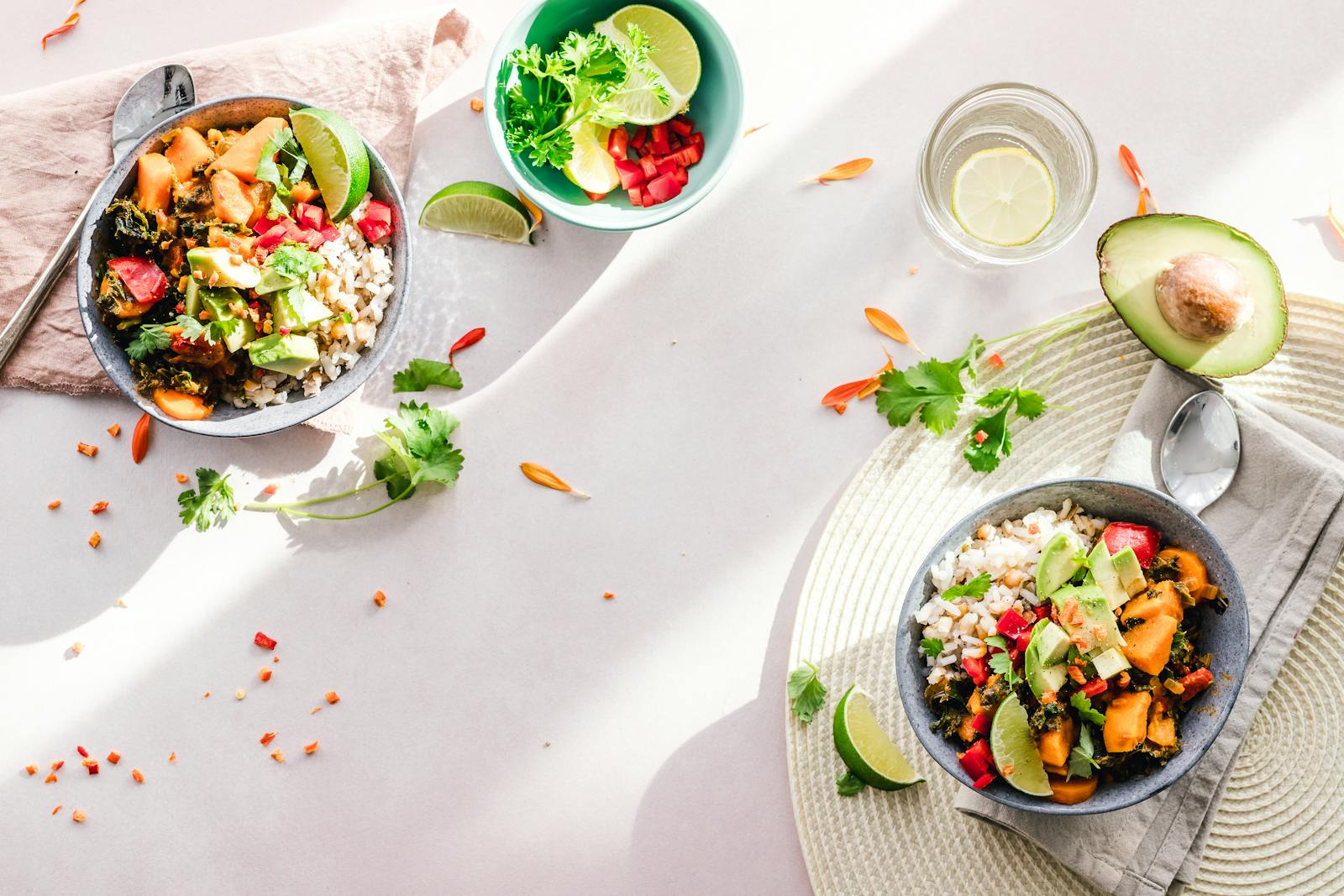
Five Lunches From Three Bases
Here is how the same three bases become five different lunches, so you never eat the same meal twice in a row:
- Monday — Grain bowl. Grain, protein, roasted vegetables, a handful of salad leaves, and a squeeze of lemon. Add a spoonful of hummus if you have it.
- Tuesday — Wrap. The same fillings rolled in a whole-wheat tortilla with a spread of mustard or yogurt-based sauce. Wrap it tightly and it travels well.
- Wednesday — Soup. Simmer leftover grain and vegetables in broth with canned tomatoes and beans for a quick soup. Soup also adds fluid to your day, which supports the hydration habits in our healthy drink recipes companion reading on fluids.
- Thursday — Big salad. Salad leaves, grain, protein, raw vegetables, and a simple dressing of olive oil, vinegar, and mustard. Our salad recipes offer five more combinations when you want variety.
- Friday — Stir-fry or skillet. Toss the remaining grain, protein, and vegetables in a hot pan with garlic, ginger, and a splash of soy sauce for a fast hot lunch.
Notice that no lunch required a new cooking session. Each one is assembly, not cooking, which is the point: the cooking happened once, and the lunches happen in five minutes each. If you prefer cold lunches, all five work cold except the soup and the stir-fry, which reheat in two minutes.
Food Safety: The Rules That Matter
Meal prep only works if the food stays safe to eat, and the USDA Food Safety and Inspection Service gives clear rules for this. Cool cooked food within two hours of cooking, refrigerate it in shallow, covered containers, and eat refrigerated leftovers within three to four days. That three-to-four-day window is the key planning fact: a Sunday cook covers Monday through Wednesday or Thursday comfortably, and a smaller Wednesday-evening top-up covers Thursday and Friday. Freezing extends the window — cooked grains, soups, and many proteins freeze well for two to three months — so a double batch of soup can become a future week's lunch with no extra effort.
Reheat leftovers until they are steaming hot throughout, to 165°F (74°C) for most cooked foods, and reheat sauces and soups to a rolling boil. Do not taste-test old food to decide whether it is safe; the USDA is explicit that bacteria that cause illness do not always change how food looks or smells. When in doubt, throw it out. Keep raw and cooked foods separate in the fridge, store raw meat on the lowest shelf, and wash your hands, boards, and utensils between handling raw and cooked ingredients.
Containers and Storage Tips
You do not need a matching set of containers to start. Any clean, lidded containers you already own will do, though clear containers help because you can see what is inside without opening them. Glass containers reheat well and do not stain; plastic containers are lighter for carrying. Keep dressings and sauces separate until lunchtime, so salads stay crisp, and label containers with the cooking date if you prep more than one batch at a time. A roll of masking tape and a pen is the cheapest meal prep tool you will ever buy.
Meal Prep Without Cooking Daily: The No-Cook Options
Some weeks, even one cooking session is too much. No-cook lunches can still be balanced: a whole-wheat wrap with canned tuna or beans, a yogurt parfait with fruit and oats, a cheese and whole-grain cracker plate with raw vegetables, or a hummus and vegetable box. These take five minutes each and need no stove at all. Since no-cook lunches lean more on packaged foods than cooked ones do, it is worth checking sodium and added sugars on the packaged items you choose.
For no-cook weeks, lean on foods that need no label at all — fruit, raw vegetables, nuts, yogurt, and cheese — and use packaged items as the supporting cast rather than the main event. That balance keeps a no-cook lunch close to a cooked one in nutritional terms, without any extra effort.

Planning Your Week in 15 Minutes
Meal prep starts with a plan, and the plan takes fifteen minutes, not an hour. On the evening before your cooking session, check what you already have, choose your three bases, and write a short shopping list. Shop from the list, not from the aisles, and you will waste less and spend less. If you keep a standing list — grains, beans, eggs, a cooking oil, a few spices, and whatever vegetables are in season — most weeks need only a short top-up shop.
Build the plan around your real week, not an ideal one. If Thursday is always a late day, plan a no-cook lunch for Thursday. If you eat lunch at your desk, plan foods that travel well and smell mild when reheated. If you share meals with family, cook a larger batch of the same bases and let everyone assemble their own lunch from them. Meal prep that fits your life survives; meal prep that fights your life gets abandoned by week two.
Seasonal thinking helps here too. In fall, squash, root vegetables, and apples are inexpensive and store well, and they roast beautifully as a meal prep base. Our fall seasonal eating guide covers how to pick and cook them, and our winter healthy foods guide extends the same idea into the colder months. Eating seasonally is not a rule; it is a shortcut to cheaper, fresher ingredients that happen to fit meal prep well.
Frequently Asked Questions
How long does meal prep food last in the fridge?
According to the USDA, cooked leftovers should be eaten within three to four days when refrigerated. Plan a Sunday cook for Monday through Wednesday or Thursday, and add a small midweek top-up for the rest of the week.
Do I have to eat the same lunch every day?
No. Cook versatile bases — a grain, a protein, and vegetables — and turn them into different meals: a bowl, a wrap, a soup, a salad, and a stir-fry. Same ingredients, different lunches.
Can I freeze meal prep lunches?
Yes. Cooked grains, soups, and many proteins freeze well for two to three months. Cool them promptly, store them in freezer-safe containers, and thaw them in the fridge overnight before reheating.
What if I don't have time to cook on Sunday?
Pick any evening that works, or use no-cook lunches for that week: wraps, yogurt parfaits, hummus boxes, and cheese-and-cracker plates with raw vegetables are all balanced options that need no stove.
How do I reheat leftovers safely?
Reheat until steaming hot throughout — 165°F (74°C) for most cooked foods — and bring soups and sauces to a rolling boil. Do not rely on taste or smell to judge safety; when in doubt, throw it out.
Disclaimer: This article is for general information only and is not medical advice. Talk to a qualified health professional about your own situation.



0 Comments
Play nice — spam and promo links are deleted.