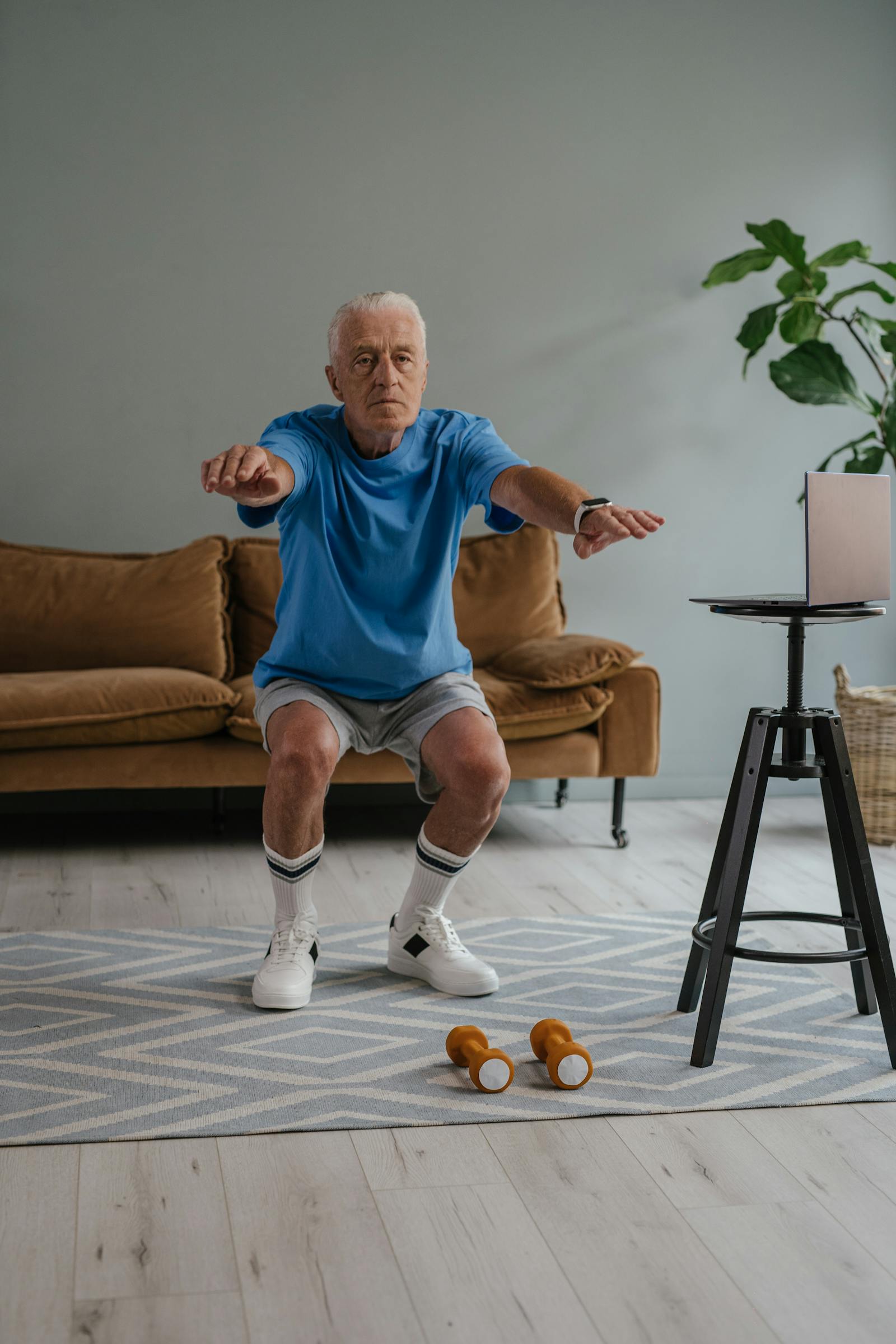
Good balance is what lets you step off a curb, turn quickly to answer the door, or carry groceries without wobbling. It is a skill, not just a trait you are born with — and like strength or flexibility, it can be practiced at home with simple exercises and no special equipment.
The short answer: practice a few minutes of balance work most days, always near sturdy support, starting with easy moves such as weight shifts and supported single-leg stands, then progress slowly to harder versions only when the easy ones feel steady. The routine below takes about 10 minutes and fits into a living room.
The Centers for Disease Control and Prevention (CDC) notes that falls are common among older adults, with more than one in four adults aged 65 and older reporting a fall each year. The CDC's physical activity guidance for older adults includes balance activities alongside aerobic and muscle-strengthening activity. Practicing balance at home is one practical way to follow that guidance, and it pairs well with general movement habits such as those in our guide to walking for health and our daily stretching routine.
Before You Start: Safety First
Set up your practice space before you begin. Choose a clear area with a firm, non-slip floor, wear supportive closed-toe shoes, and stand next to a sturdy chair, kitchen counter, or heavy table you can hold onto. Keep the support within arm's reach for every exercise, even once you feel confident.
Move slowly and stay in control. Balance practice should feel mildly challenging but never scary or painful. Stop and sit down if you feel dizzy, short of breath, or unsteady. If you have fallen recently, feel dizzy often, or have a condition that affects your bones, joints, nerves, or blood pressure, talk with a qualified health professional before starting a new exercise routine.
How Balance Works
Balance depends on several systems working together: your eyes, the balance organs in your inner ears, and sensors in your muscles and joints that tell your brain where your body is in space. Strength in your legs and core also matters, because strong legs can correct a small wobble before it becomes a stumble.
That is why a good home routine mixes three kinds of practice: still balance (standing steady in one place), moving balance (walking in a controlled way), and leg strength (the muscles that support both). You do not need to master any single move. A little of each, done regularly, is the most useful approach.
The Exercises: Start Here
1. Weight Shifts
Stand with your feet hip-width apart, hands resting lightly on your support. Slowly shift your weight to one side, letting the opposite foot lighten, and hold for up to 10 seconds. Return to center and repeat on the other side. Do five shifts per side. This gentle move teaches your body to control small changes in weight without stepping.
2. Supported Single-Leg Stand
Stand beside your chair or counter with one hand on the support. Lift one foot a few inches off the floor and hold for 10 seconds, keeping your standing knee soft and your eyes looking forward. Lower the foot and switch sides. Aim for five stands per leg. As this becomes easy, try holding for 20 seconds, then using only fingertips on the support.
3. Heel Raises
Stand behind your chair with both hands on its back. Slowly rise onto your toes, hold for two seconds, and lower with control. Repeat 10 times. Heel raises strengthen the calf muscles that help you push off when walking and recover from a stumble.
4. Heel-to-Toe Walk
Stand near a wall or counter you can reach. Place one foot directly in front of the other so the heel of the front foot touches the toes of the back foot. Take 10 slow steps forward in this narrow line, keeping your eyes forward and a hand hovering near support. If the full heel-to-toe line feels too hard, start with feet closer together than usual rather than fully touching, and narrow the gap over time.
5. Side Steps
Stand beside your counter with feet together. Step sideways with one foot, then bring the other foot to meet it. Take 10 steps in one direction, then 10 steps back. Side steps train the hip muscles that keep you stable when you move sideways, such as stepping around furniture or getting out of a car.
6. Sit-to-Stand
Sit in a sturdy chair with armrests, feet flat on the floor. Lean slightly forward and stand up slowly, using the armrests as little as possible. Sit back down with control. Repeat five to 10 times. This is both a strength move and a balance move, and it directly practices one of the most common daily transitions. Our guide to strength training for beginners at home has more leg-strength ideas that pair well with this routine.
A 10-Minute Routine to Follow
Put the moves together like this: two minutes of gentle marching in place to warm up, then weight shifts, single-leg stands, and heel raises (about two minutes each), followed by heel-to-toe walking and side steps, and finish with sit-to-stands. Rest whenever you need to. Ten minutes, two or three times a week, is a sensible starting goal, and you can add a short daily session once the routine feels comfortable.
Progress slowly. The general rule is to make one thing slightly harder at a time: hold a little longer, use a little less hand support, or take a few more steps — never all three at once. Keep both hands on support whenever you try a new version for the first time.
Everyday Habits That Support Balance
Balance practice works best alongside ordinary daily habits. Keep walkways clear of cords and clutter, use night lights on the path to the bathroom, and wear shoes with low, non-slip soles rather than socks alone on smooth floors. Review your home for loose rugs that slide, and consider non-slip backing if you keep them.
Regular movement matters too. Walking, gentle yoga, and tai chi all involve shifting weight and changing direction, which keeps balance skills in everyday use. Our beginner yoga guide includes gentle poses that complement balance work, and staying active indoors in cold weather is covered in our guide to staying active indoors.
Frequently Asked Questions
How often should I practice balance exercises?
Two or three short sessions a week is a good starting point for most adults, and many people build up to a few minutes most days. Short, frequent practice tends to work better than one long, tiring session.
How long does it take to notice a difference?
Many people feel steadier within a few weeks of regular practice, though the timeline varies. Progress is often gradual: holds feel easier, you need less hand support, or everyday moves such as turning feel more controlled.
Should I practice with my eyes closed?
No, not as a beginner. Closing your eyes removes visual cues and makes balance much harder. Keep your eyes open and your support nearby. More advanced variations are best explored with guidance from a qualified professional.
What should I do if I feel unsteady during an exercise?
Hold your support, return both feet to the floor, and sit down if needed. Feeling mildly challenged is normal; feeling dizzy, in pain, or afraid of falling is a sign to stop that move and try an easier version next time.
Can younger adults benefit from balance practice too?
Yes. Balance is useful at every age for sports, hiking on uneven ground, and everyday agility. The same exercises work for younger adults, who can progress to longer holds and less support as they feel steady.
Balance improves with the same logic as any other skill: small, regular, controlled practice. Clear a space, keep support close, and start with the easiest version of each move. A few minutes a few times a week is enough to begin, and steadier movement in daily life is a reward worth the small effort.
Disclaimer: This article is for general information only and is not medical advice. Talk to a qualified health professional about your own situation.



0 Comments
Play nice — spam and promo links are deleted.