The short answer: a daily stretching routine of 10 minutes, done gently and consistently, is enough to keep most desk workers moving comfortably — you do not need to be flexible to start, and you do not need any equipment. Focus on the areas that sitting tightens most: neck, shoulders, chest, hips, and calves. Hold each stretch for 20 to 30 seconds, breathe normally, and never push into pain. This guide gives you a complete routine you can do at your desk or on a mat at home.
Long hours at a desk tend to produce the same pattern: shoulders rounded forward, head drifting toward the screen, hips folded at 90 degrees, and calves still for hours. The American Heart Association notes that breaking up long periods of sitting with movement is important for general health, and gentle stretching is one of the easiest ways to do it. Stretching does not replace walking or other activity, but it complements them — and it is something you can do in the middle of a workday without changing clothes.
Before You Start: Ground Rules
Warm up first. Muscles stretch more comfortably when they are warm, so do two minutes of gentle movement — marching in place, arm circles, or a short walk to get water — before holding stretches. Move slowly into each stretch until you feel mild tension, not pain. Pain is a signal to back off, not a goal. Breathe normally throughout; holding your breath makes muscles tense up, which defeats the purpose. If you have an existing injury, joint condition, or a health condition that affects movement, check with a health professional before starting a new routine.
Hold times matter more than intensity. Research summarized by Mayo Clinic supports holding a static stretch for about 30 seconds for most adults, with older adults benefiting from holds closer to 60 seconds. Two to four repetitions per stretch is plenty. A routine done gently every day beats an aggressive routine done once a week.
The 10-Minute Desk Worker Routine
Do this routine once a day, ideally in the late morning or mid-afternoon when stiffness peaks. You need a chair, a wall, and about six feet of floor space.
Neck and shoulders (3 minutes)
Start with slow neck half-circles: drop your right ear toward your right shoulder, roll your chin slowly toward your chest, and bring your left ear toward your left shoulder. Do not roll your head fully backward. Repeat 4 times each direction. Follow with shoulder rolls: lift both shoulders toward your ears, roll them back and down in a slow circle, 10 times, then reverse direction for 10 more. Finish with a shoulder blade squeeze: pull your shoulder blades gently together, hold 5 seconds, release, and repeat 10 times. This counters the rounded-shoulder posture that hours at a keyboard encourage.
Chest opener (1 minute)
Stand in a doorway, place your forearms on the door frame at shoulder height, and step gently forward until you feel a mild stretch across the front of your chest. Hold 30 seconds, step back, and repeat once. The doorway chest stretch is a simple way to open the front of the body after hours of hunching forward, and it pairs well with the shoulder work above.
Hips and legs (4 minutes)
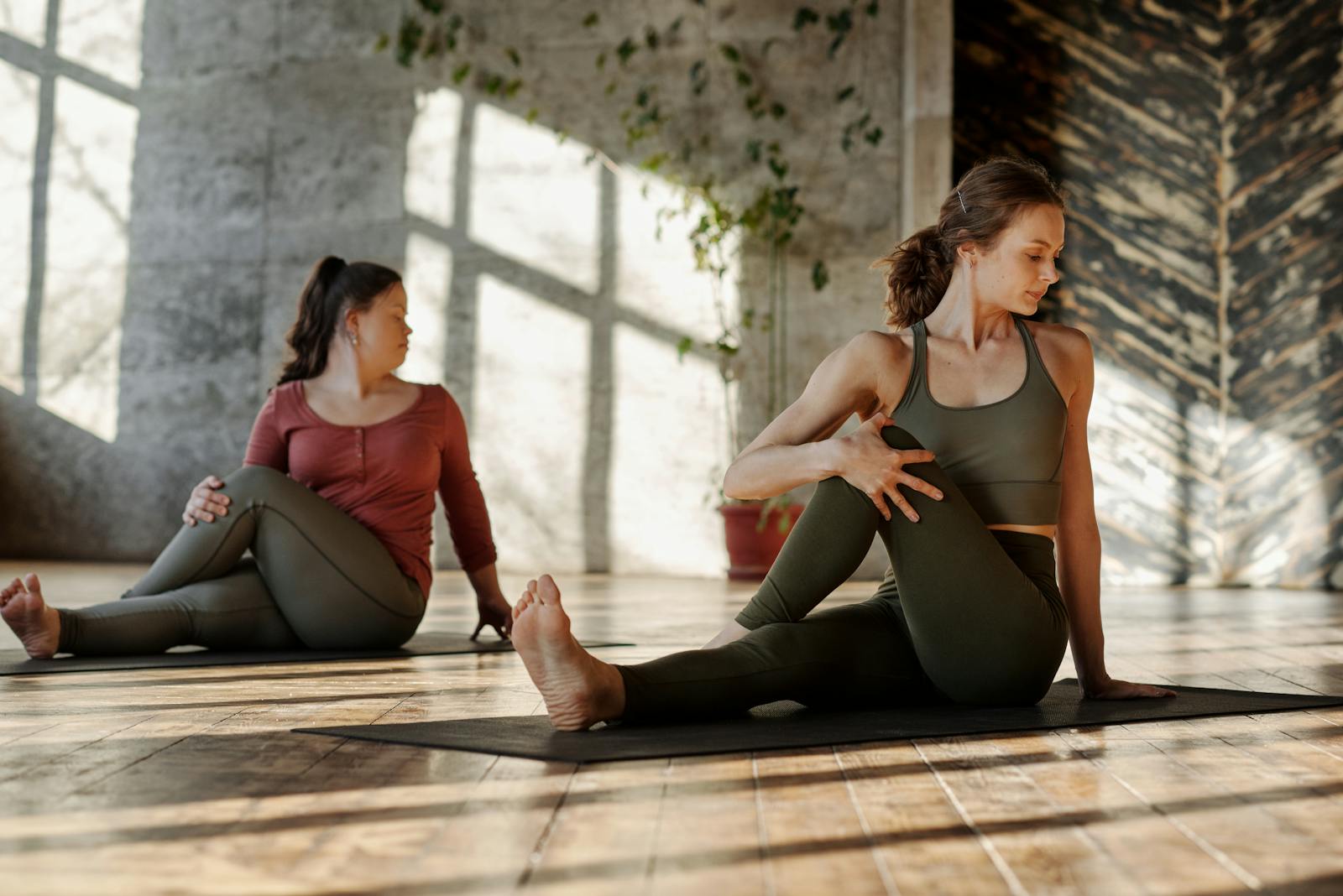
Seated hip stretch: sit tall in your chair, cross your right ankle over your left knee, and gently press your right knee down until you feel a stretch in the outer hip. Hold 30 seconds, switch sides. Next, a standing hip flexor stretch: step your right foot forward into a small lunge, keep your back leg straight, tuck your pelvis slightly under, and hold 30 seconds per side. You can hold a chair or wall for balance.
For the hamstrings, try a seated hamstring stretch: extend one leg straight in front of you with the heel on the floor, sit tall, and hinge gently forward from the hips until you feel a mild pull behind the thigh. Hold 30 seconds per side. Finish with a calf stretch at the wall: place both hands on the wall, step one foot back with the heel pressed to the floor, and lean forward gently. Hold 30 seconds per side. Calves stiffen quickly when you sit all day, and this stretch also prepares your ankles for walking.
Back and full body (2 minutes)
Finish with a seated twist: sit tall, place your right hand on the outside of your left knee, and rotate gently to the left, looking over your left shoulder. Hold 20 to 30 seconds, then switch sides. End with an overhead reach: interlace your fingers, press your palms toward the ceiling, and lengthen your whole spine for 10 seconds. Take four slow breaths and let your arms come down.
This routine pairs naturally with walking. Our guide to walking for health explains how a short daily walk builds on the mobility this routine restores, and many people find that stretching first makes their walk feel easier. If you work from home, our guide to making early mornings a habit shows how a morning routine like this one can anchor the rest of the day.
Stretching at Your Desk, Without a Mat
You do not need to leave your desk for most of this routine. Neck rolls, shoulder rolls, shoulder blade squeezes, seated hip stretches, and seated twists all work in a chair. The standing moves — chest opener, hip flexor stretch, calf stretch — need only a doorway or wall and take two minutes. Set a reminder to stretch every 90 minutes: even one minute of shoulder rolls and a standing reach breaks up the longest sitting stretches.
Two habits multiply the benefit. First, adjust your workstation so you are not fighting it: screen at eye level, feet flat on the floor, and elbows near 90 degrees. Second, stand up at least once an hour, even briefly. Stretching helps a poor posture, but no stretch fully compensates for eight unbroken hours in a chair.
Common Stretching Mistakes
Bouncing is the classic error. Ballistic stretching — bouncing at the end of a stretch — can strain muscles and is not recommended for a general routine. Move slowly and hold still. Another mistake is stretching cold muscles aggressively first thing in the morning: gentle movement first, then stretches. A third mistake is holding your breath, which tightens the very muscles you are trying to relax. Finally, many people stretch only the area that hurts and skip the areas around it. Neck pain, for example, often involves the chest and upper back too, so a balanced routine covers the whole chain rather than one spot.
It is also worth knowing what stretching cannot do. Stretching does not "fix" posture on its own, and it does not replace strength or aerobic activity. Think of it as maintenance: it keeps your range of motion usable so that walking, strength work, and daily tasks feel easier. Our guide to sleep hygiene basics also notes that a gentle evening stretch can be part of a wind-down routine — many people find a few slow stretches before bed help them shift out of work mode.
Frequently Asked Questions
How long should I hold each stretch?
About 30 seconds is a good target for most adults, with up to 60 seconds for older adults. Two to four repetitions per stretch is plenty. Longer holds are not necessarily better.
Should stretching hurt?
No. You should feel mild tension, not pain. Sharp pain, numbness, or tingling means you should stop and ease off. If pain persists, talk to a health professional.
Is it better to stretch in the morning or evening?
Either works — the best time is the time you will actually do it. Morning stretching can ease overnight stiffness; evening stretching can help you unwind. Many desk workers benefit most from a mid-afternoon session, when sitting stiffness peaks.
Can I stretch every day?
Yes. Gentle daily stretching is fine for most people, as long as you stay within a comfortable range and do not force any movement. If a stretch causes soreness that lasts more than a day, ease back on intensity.
Does stretching replace exercise?
No. Stretching improves flexibility and comfort, but it does not provide the heart, muscle, or bone benefits of aerobic activity and strength work. Pair it with walking or other activity for a complete routine.
Disclaimer: This article is for general information only and is not medical advice. Talk to a qualified health professional about your own situation.



0 Comments
Play nice — spam and promo links are deleted.